


Customer Support Services: Types, Benefits, Outsourcing & Best Practices

Last updated on July 28th, 2026

Customer expectations have changed dramatically in the digital era. Businesses are no longer judged only by their products but by how effectively they respond when something goes wrong. Even a minor delay or inconsistent response can significantly influence how customers perceive a brand, often impacting long-term trust and loyalty.
Modern customer support services play a central role in shaping customer satisfaction and retention. Companies that invest in structured and well-designed support systems tend to experience higher customer loyalty, improved brand reputation, and stronger revenue performance over time. Support is no longer just a reactive function; it has become a strategic business driver.
At the same time, organizations are rethinking how support operations are structured. Many businesses are now combining in-house teams, automation technologies, and outsourced models to build more flexible and scalable customer support ecosystems. This shift allows companies to respond faster while maintaining consistent service quality across all customer touchpoints.
Table of Contents
What Are Customer Support Services?
Why Customer Support Services Matter for Business Growth
Types of Customer Support Services & Channels
Why Ecommerce Businesses Need Specialized Support
In-House vs Outsourced Customer Support
How AI and Human Agents Work Together
What Are Customer Support Services?
Customer support services are the systems, teams, technologies, and processes that assist customers before, during, and after a purchase. Their primary objective is to resolve issues, answer questions, and ensure a positive customer experience.
Unlike broader service functions, support focuses on specific customer needs such as troubleshooting, order tracking, refunds, and account assistance. Each interaction is designed to solve a problem efficiently while maintaining a positive brand experience.
Today, customer support services extend across multiple digital channels, including email, live chat, social media, and self-service portals. Businesses must ensure consistency across all touchpoints to meet rising customer expectations and avoid fragmented experiences.
Turn your customer support services into a seamless, low-effort experience that systematically builds brand loyalty.
Why Customer Support Services Matter for Business Growth
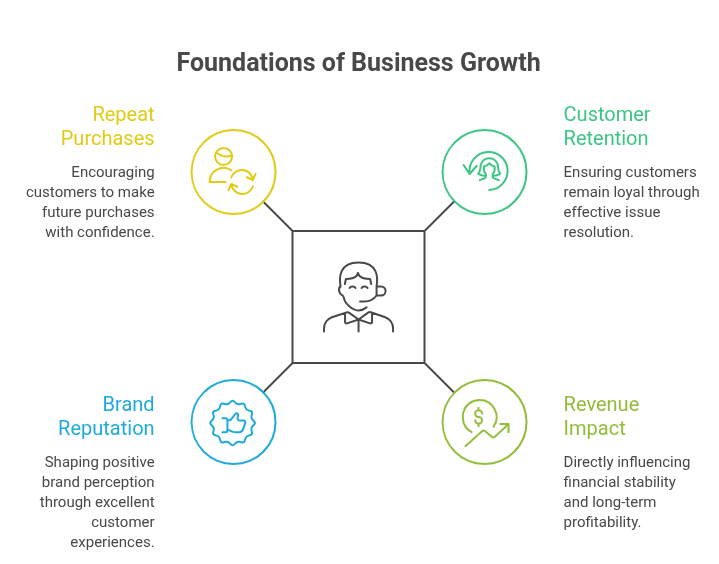
Strong support systems directly influence business performance in multiple ways. They are no longer just operational necessities but key drivers of growth, retention, and customer lifetime value.
Customer Retention and Loyalty
Customer retention is heavily influenced by how effectively a business resolves issues. When customers receive timely and helpful responses, they are far more likely to continue doing business with the same brand. On the other hand, unresolved or delayed issues can quickly lead to dissatisfaction and churn, even if the product itself meets expectations.
Revenue Impact
Customer support is directly linked to revenue stability and long-term profitability. Research shows that a seamless, low-effort customer service experience is the single greatest driver of brand loyalty, heavily impacting whether a customer chooses to stay with a company or defect to a competitor. This demonstrates the significant financial impact of modernizing service quality to guard your market share.
This highlights how customer support services directly influence customer loyalty, repeat purchases, and long-term revenue growth. When businesses consistently deliver fast, accurate, and helpful support, they strengthen customer trust and reduce churn. Over time, this results in higher customer lifetime value and more predictable revenue performance.
Brand Reputation
Brand perception is heavily shaped by customer service experiences. When support teams consistently resolve issues efficiently, customers are more likely to leave positive reviews, recommend the brand to others, and engage in long-term loyalty. However, poor support experiences can spread quickly through online reviews and social platforms, creating lasting reputational damage.
Repeat Purchases
Customers who experience reliable support are more confident in making future purchases. They know that if issues arise, the business will respond effectively. This confidence translates into higher repeat purchase rates and increased customer lifetime value.
Types of Customer Support Services & Channels
Modern businesses rely on multiple communication channels to meet diverse customer expectations.
Email Support
Email support remains one of the most widely used communication methods for customer inquiries. It allows customers to explain issues in detail and provides businesses with a documented communication trail that can be referenced later. This makes it especially useful for complex or non-urgent concerns.
Phone Support
Phone support provides immediate, real-time assistance for customers who need urgent help. It is particularly effective for complex issues that require back-and-forth communication, where clarity and speed are essential to resolution.
Live Chat Support
Live chat has become a preferred support channel for many customers because it offers instant responses without requiring them to leave a website. It is widely used in ecommerce environments where quick assistance can influence purchasing decisions.
Social Media Support
Social media has evolved into a major support channel where customers expect quick responses. Businesses that actively monitor and respond to queries on platforms such as Facebook, Instagram, and X can improve brand perception and customer engagement significantly.
Help Desk Systems
Help desk platforms help businesses organize and manage customer queries efficiently. These systems centralize communication, automate workflows, and ensure that no customer issue goes unresolved or overlooked.
Self-Service Portals
Self-service portals allow customers to resolve common issues on their own without needing to contact support teams. These include FAQs, knowledge bases, and tutorial content that reduce support workload while improving customer convenience.
Omnichannel Support
Omnichannel support integrates all communication channels into a single unified system. This ensures that customers receive consistent assistance regardless of how they choose to contact the business, creating a seamless support experience across all touchpoints.
Why Ecommerce Businesses Need Specialized Support
Ecommerce businesses operate in a fast-paced environment where customer expectations are particularly high. Unlike traditional businesses, they must manage large volumes of customer inquiries related to orders, shipping, and returns on a daily basis.
Ecommerce customer support teams handle issues such as order tracking, refunds, shipping delays, product availability, and payment concerns. These interactions directly influence customer satisfaction and future buying behavior.
Businesses that fail to optimize ecommerce customer support often experience increased cart abandonment, lower customer satisfaction scores, and reduced repeat purchases.
In-House vs Outsourced Customer Support
Businesses often face a critical decision when scaling operations: whether to build internal support teams or choose to outsource customer support functions.
| Factor | In-House | Outsourced |
| Cost | Requires high investment in hiring, training, and infrastructure | More cost-efficient with predictable pricing |
| Scalability | Limited by internal capacity | Can scale quickly based on demand |
| Expertise | Requires ongoing development | Immediate access to trained professionals |
| Technology | Needs separate investment | Often included in service packages |
| Speed | Slower to implement | Faster deployment |
| Management | Requires constant oversight | Reduced operational burden |
Many companies choose to outsource customer support because it allows them to scale faster while maintaining service quality. This approach is especially valuable for ecommerce businesses that experience fluctuating demand throughout the year.
How AI and Human Agents Work Together
Modern customer support services rely on a combination of artificial intelligence and human expertise to deliver efficient and personalized experiences.
AI Chatbots
AI chatbots provide instant responses to common customer inquiries. They are available 24/7 and help reduce response time by handling repetitive tasks such as order tracking or basic troubleshooting.
Smart Ticket Routing
AI systems can analyze incoming customer requests and automatically assign them to the most appropriate department or agent. This improves efficiency and reduces resolution time.
AI-Assisted Responses
Support agents can use AI-generated suggestions to respond faster and more accurately. This helps maintain consistency while improving productivity across teams.
Human Escalation
When issues are too complex or require empathy, they are escalated to human agents who can provide personalized assistance and problem resolution.
How to Choose the Right Provider
Selecting the right customer support partner goes beyond comparing pricing. Businesses need to evaluate capabilities, reliability, and long-term scalability to ensure the provider can support both current needs and future growth.
Industry Experience
A strong provider should have proven experience within your specific industry. This ensures they understand customer expectations, common pain points, and the type of support interactions your business typically receives. Industry familiarity also leads to faster onboarding and more accurate customer handling.
Technology Capabilities
Modern customer support depends heavily on technology. Businesses should assess whether a provider offers advanced tools such as CRM integration, omnichannel communication platforms, AI-assisted workflows, and automation features that improve efficiency and response times.
Service Level Agreements (SLAs)
Clear and well-defined SLAs establish measurable expectations for response times, resolution speed, and overall service quality. These agreements create accountability, reduce operational risks, and ensure consistent performance across all support channels.
Security Standards
Data security is a critical factor when outsourcing customer support. Providers must follow strict security protocols, comply with relevant data protection regulations, and implement safeguards that protect sensitive customer information at all times.
Reporting and Analytics
Comprehensive reporting is essential for continuous improvement. A reliable provider should offer detailed performance analytics, including response times, resolution rates, customer satisfaction scores, and trend insights that help businesses optimize their support strategy.
Scalability
As business demand fluctuates, especially in ecommerce environments, the provider must be able to scale quickly without compromising service quality. Strong scalability ensures seamless handling of peak seasons, product launches, and sudden spikes in customer inquiries.
Conclusion
Customer support has evolved into a core business function that directly influences customer loyalty, revenue, and long-term success. Businesses that invest in scalable systems, skilled teams, and modern technologies are better positioned to meet rising customer expectations.
Whether companies choose to build internal teams or outsource customer support, the goal remains the same: deliver fast, consistent, and effective assistance that enhances the overall customer experience.
For digital businesses, especially those relying on ecommerce customer support and customer service for ecommerce, strong support systems are essential for sustainable growth and competitive advantage
FAQs
1. What makes customer support different from customer service?
Customer support focuses on resolving specific issues such as troubleshooting or technical help, while customer service includes broader relationship-building activities. Support is more problem-oriented, while service is more experience-oriented.
2. How does outsourcing affect customer satisfaction?
When managed properly, outsourcing can improve customer satisfaction by providing faster response times, 24/7 availability, and access to trained professionals. Poorly managed outsourcing, however, can lead to inconsistent experiences.
3. What industries benefit most from omnichannel support?
Industries such as ecommerce, SaaS, banking, and telecommunications benefit the most because customers interact across multiple platforms and expect consistent service across all channels.
4. Can small businesses benefit from AI in customer support?
Yes. Even small businesses can use AI tools such as chatbots and automated ticketing systems to improve response times, reduce workload, and provide better customer experiences without hiring large teams.