


Call Center Types Explained: Functions, Benefits, and Business Applications

Last updated on May 26th, 2026

Many businesses think they need “a call center” when what they actually need is the right call center model. That distinction matters. A mismatched support structure can increase costs, frustrate customers, and slow growth. On the other hand, the right setup can improve response times, protect revenue, and create better customer experiences at scale.
This is why understanding call center types is no longer optional. Whether you need outsourced phone answering, proactive sales outreach, or specialized ecommerce call center outsourcing, the best solution depends on your goals, customer expectations, and operational complexity. The smartest businesses don’t buy generic support; they build the right support engine. Choosing the right call center setup can be the difference between simply handling calls and driving real business growth. Connect with Vserve today to discuss a call center solution tailored to your business goals and customer needs.
What Is a Call Center?
A call center is a centralized support function that manages customer communication through phone, chat, email, messaging, or other channels. Traditionally, call centers focused on voice calls. However, modern operations often handle multiple communication channels and customer needs.
Depending on the business model, a call center may support:
- Customer service inquiries
- Technical support
- Order management
- Sales outreach
- Appointment scheduling
- Complaint resolution
- Retention and follow-up campaigns
Therefore, call centers are not one-size-fits-all. Their structure should align with business objectives.

Why Choosing the Right Call Center Type Matters
The wrong support model creates hidden costs. Businesses may overstaff low-value functions, understaff peak demand, or fail to meet customer expectations.
The right model helps businesses:
- Improve customer satisfaction
- Lower support costs
- Increase response speed
- Scale during growth periods
- Protect brand reputation
- Support revenue generation
As a result, choosing the correct call center type is a strategic decision, not just an operational one.
Boost customer satisfaction and reduce operational costs by outsourcing call center operations tailored to growth goals
Types of Call Centers
Inbound Call Centers Explained
Inbound call centers handle incoming customer contacts. These interactions usually involve customers who need help, information, or assistance.
Common inbound functions include:
- Product questions
- Billing support
- Technical troubleshooting
- Order status updates
- Returns and refunds
- Complaint handling
Inbound support is essential for businesses that depend on trust and responsiveness. Additionally, strong inbound operations improve loyalty because customers remember fast and helpful service.
Outbound Call Centers Explained
Outbound call centers focus on proactive communication initiated by the business. Instead of waiting for customer contact, teams reach out to prospects or existing customers.
Typical outbound call center services include:
- Lead generation
- Appointment setting
- Sales campaigns
- Payment reminders
- Customer surveys
- Win-back campaigns
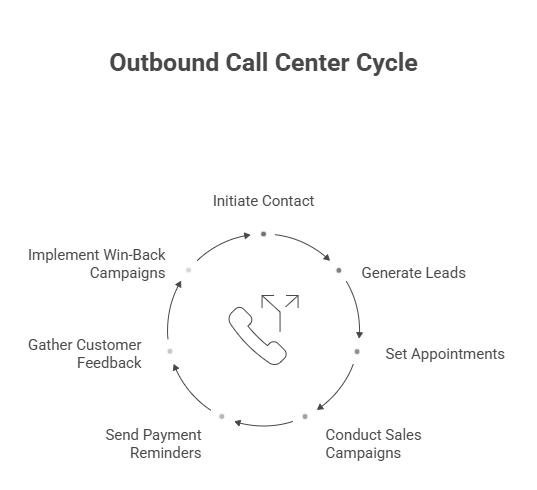
When managed correctly, outbound teams do more than make calls; they create pipeline opportunities, improve retention, and generate measurable ROI.
Blended Call Centers Explained
Many businesses need both inbound and outbound support. That is where blended call centers add value.
A blended model combines:
- Incoming customer support
- Outgoing sales or follow-up campaigns
- Flexible staffing across channels
- Better use of agent capacity
For growing companies, this model can be more efficient than maintaining separate teams.
Virtual and Cloud Call Centers
Traditional call centers relied on physical offices and on-site infrastructure. Today, cloud-based operations offer more flexibility.
Virtual and cloud call centers provide:
- Remote staffing options
- Faster scaling during peak seasons
- Lower infrastructure costs
- Real-time dashboards and reporting
- Easier integration with CRM tools
Consequently, businesses gain agility while maintaining service quality.
Omnichannel Customer Support Centers
Customers no longer communicate through one channel. They may call today, email tomorrow, and use chat next week.
Omnichannel support centers unify communication across:
- Phone
- Live chat
- Social media
- Messaging apps
This creates a consistent experience because agents can view customer history across channels and continue conversations without forcing customers to repeat information. Additionally, integrating technical and help desk support services allows businesses to resolve more complex issues quickly, improve first-contact resolution rates, and deliver a smoother customer experience overall.
Boost customer satisfaction and reduce operational costs by outsourcing call center operations tailored to growth goals
Industry-Specific Call Centers for eCommerce
eCommerce businesses face unique support challenges: order spikes, returns, delivery concerns, payment issues, and product inquiries. Generic support teams often struggle in these environments.
That is why many brands invest in ecommerce call center outsourcing and specialized call center for ecommerce operations.
These teams typically handle:
- Order tracking
- Return requests
- Product questions
- Cart abandonment follow-up
- Payment support
- Marketplace customer inquiries
Additionally, eCommerce-focused support helps brands protect reviews, reduce churn, and improve repeat purchases.
Benefits of Outsourcing Call Center Operations
Building an in-house support team can be expensive and time-consuming. Outsourcing offers a faster and more scalable alternative.
Modern customer care outsourcing solutions help businesses:
| Reduce Costs | Lower hiring, training, and infrastructure expenses. |
| Access Skilled Talent | Use experienced agents with proven workflows. |
| Extend Coverage | Provide after-hours, weekend, or 24/7 support. |
| Scale Faster | Expand during promotions, seasonal spikes, or growth phases. |
| Improve Focus | Allow internal teams to prioritize strategy and core operations |
For many businesses, outsourcing is not just a cost decision; it is a growth decision.
How to Choose the Best Call Center Model
The best call center setup depends on your goals. Start by asking:
- Do you need proactive growth campaigns?
Add outbound capabilities.
- Do customers use multiple channels?
Adopt omnichannel operations.
- Do you need flexibility without building internal teams?
Consider outsourcing.
By matching your model to real business needs, you avoid wasted spend and improve outcomes.
Why Businesses Choose Vserve for Call Center Service
The right support partner should do more than answer calls. Vserve helps businesses build customer operations that scale efficiently and strengthen brand trust.
Businesses choose Vserve for:
- Flexible Call Center Solutions: Inbound, outbound, and blended support models
- eCommerce Expertise: Purpose-built support for online stores and marketplaces
- Scalable Operations: Expand support without operational strain
- Cost Efficiency: Reduce overhead while maintaining quality
- Customer-First Execution: Faster responses and better experiences
Whether you need overflow support or a fully managed customer operation, Vserve helps turn service into a competitive advantage.
Frequently Asked Questions
1. What is the difference between a contact center and a call center?
A call center traditionally focuses on voice support, while a contact center handles multiple channels such as chat, email, social media, and messaging. Many modern businesses prefer contact center capabilities because customers expect support across several communication methods, not just phone calls.
2. Is outsourcing only useful for large companies?
No. Small and mid-sized businesses often benefit the most because outsourcing gives them access to trained agents, better tools, and scalable support without the cost of building an internal department. It helps smaller companies compete with larger brands more efficiently.
3. How quickly can outsourced support teams start?
Launch timelines vary depending on training complexity, systems access, and support scope. Simple phone answering services may start quickly, while specialized technical or eCommerce support can take longer. A strong provider will offer a clear onboarding plan and a realistic implementation timeline.
4. How do I measure call center performance?
Key metrics include response time, first-contact resolution, customer satisfaction, abandonment rate, average handling time, and conversion rates for sales teams. The best metrics depend on whether the operation is focused on service, retention, or revenue generation.
5. Can outsourced teams match our brand voice?
Yes, when onboarding is done properly. With brand guidelines, scripts, product training, and quality monitoring, outsourced agents can represent your business consistently. The provider’s training process and quality assurance standards are critical to making this successful.
Related Services We Offer
Automotive Call Center Outsourcing Services Banking and Finance Call Center Services Call Center Services for Education Industry Call Center Services for Government Agencies Call Center Services for Logistics and Supply Chain Industry Chemical and Pharmaceutical Call Center Services eCommerce Call Center Services Inbound Call Center Services Manufacturing Call Center Services Media and Entertainment Call Center Services Medical & Healthcare Call Center Outsourcing Services Outbound Call Center Outsource Energy and Utilities Call Center Services Real Estate Call Center Outsourcing Services Telecom Call Center Outsourcing Services Travel and Hospitality Call Center Outsourcing Services