


Is Accounts Receivable Outsourcing Right for Your Business?

Last updated on June 22nd, 2026

Revenue generation gets most of the attention while accounts receivable operations remain in the background. Yet delayed payments, invoice errors, and inefficient collections can significantly impact cash flow and profitability.
As organizations grow, managing receivables becomes increasingly complex. This is one reason why many companies turn to accounts receivable services and outsourcing partners to improve collections, reduce outstanding balances, and maintain healthier cash flow.
According to a study done by the International Journal for Multidisciplinary Research, maintaining strong cash flow management practices is critical for business sustainability and growth. Companies that effectively manage receivables are better positioned to fund operations and respond to market opportunities.
The question many organizations face is simple: Is accounts receivable outsourcing the right solution for their business?
Table of Contents
What Is Accounts Receivable Outsourcing?
Which Accounts Receivable Functions Can Be Outsourced?
Is Accounts Receivable Outsourcing Right for Your Business?
Benefits, Risks, and Trade-Offs of AR Outsourcing
How to Evaluate and Prepare for AR Outsourcing
A Step-by-Step Guide to Successfully Outsourcing Accounts Receivable
What Is Accounts Receivable Outsourcing?
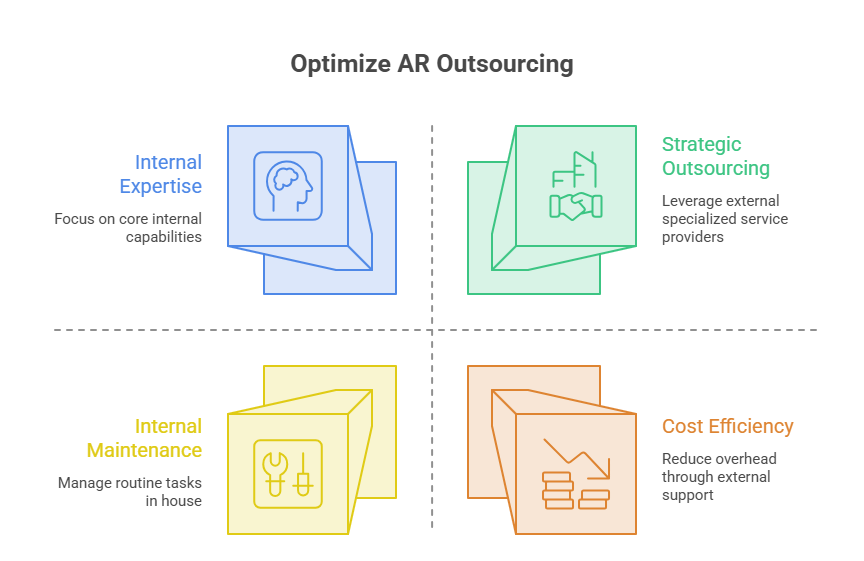
Account receivable outsourcing refers to the practice of delegating some or all accounts receivable activities to a specialized service provider.
Instead of managing invoicing, collections, payment posting, and reconciliation internally, businesses leverage external expertise and technology to streamline these processes.
Organizations use accounts receivable outsourcing for various reasons, including reducing costs, improving collections performance, and supporting business growth without significantly increasing internal headcount.
Which Accounts Receivable Functions Can Be Outsourced?
Many businesses understand the benefits of outsourcing accounts receivable processes but are often unclear about which specific functions can be delegated to an external provider. In reality, modern accounts receivable services can support a wide range of activities across the entire receivables lifecycle, from invoice creation to payment collection and reconciliation. Understanding these outsourcing options helps organizations identify opportunities to improve cash flow, reduce administrative workloads, and increase operational efficiency.
Invoice Generation and Billing Support
Many providers of accounts receivable services manage invoice creation, invoice distribution, and billing accuracy. By ensuring invoices are generated correctly and delivered promptly, businesses can reduce payment delays and minimize billing disputes. This helps create a smoother revenue cycle and improves the likelihood of on-time customer payments.
Cash Application
Cash application involves matching incoming customer payments to the appropriate invoices and accounts. Accurate processing is critical for maintaining up-to-date financial records and providing visibility into outstanding receivables. Outsourcing this function can reduce manual effort while improving reconciliation accuracy and reporting reliability.
Payment Posting and Reconciliation
Organizations frequently outsource payment posting and reconciliation to improve efficiency within their finance departments. External specialists can process payment records, reconcile account balances, and investigate discrepancies more consistently and accurately. This allows internal teams to focus on higher-value financial analysis and strategic initiatives.
Collections Management
Collections management remains one of the most commonly outsourced components of accounts receivable outsourcing. Service providers typically monitor overdue accounts, follow established collection procedures, and communicate with customers regarding outstanding balances. A structured collections process can help accelerate cash recovery while maintaining professionalism and compliance.
Customer Follow-Ups
Routine payment reminders and customer communications can consume significant internal resources, particularly for growing organizations. Professional accounts receivable services help maintain consistent follow-up schedules and ensure customers receive timely reminders regarding upcoming or overdue payments. This proactive approach supports healthier cash flow while preserving positive customer relationships.
Eliminate invoicing errors and scale your finance operations without adding to your internal headcount
Is Accounts Receivable Outsourcing Right for Your Business?

Not every company requires accounts receivable outsourcing, especially if existing processes are operating efficiently and payment cycles remain healthy. However, as businesses grow, managing invoices, collections, and customer payments can become increasingly complex and resource-intensive. Recognizing the signs that your internal team is struggling can help determine whether outsourcing is the right solution.
Rising Days Sales Outstanding (DSO)
If customer payments consistently arrive later than expected, accounts receivable outsourcing may help improve collection efficiency. Specialized providers often implement structured follow-up processes that encourage faster payments and reduce outstanding balances.
Growing Invoice Volumes
Rapid business growth often creates invoicing workloads that internal teams struggle to manage effectively. Outsourcing can provide additional resources to maintain billing accuracy and ensure invoices are issued on time.
Increasing Overdue Accounts
A growing number of past-due invoices can indicate gaps in collection processes and customer follow-up procedures. Professional accounts receivable services help establish consistent collection practices that improve payment recovery rates.
Limited Internal Resources
Many finance teams operate with limited staff and competing priorities. Outsourcing can provide additional capacity and expertise without the cost and time commitment of hiring new employees.
Expansion Into New Markets
Companies entering new regions often use accounts receivable services to support increased transaction volumes and customer diversity. This allows businesses to scale their receivables operations while maintaining efficiency and control.
Benefits, Risks, and Trade-Offs of AR Outsourcing
A balanced evaluation of accounts receivable outsourcing requires examining both the potential benefits and the possible challenges. While outsourcing can improve efficiency and cash flow, businesses should also understand the risks involved before making a decision. Proper planning and provider selection can help maximize benefits while minimizing potential drawbacks.
Benefits
- Improved Cash Flow
Specialized providers often have dedicated collection processes that accelerate payment cycles. Faster collections can improve liquidity and provide businesses with more predictable cash flow. - Lower Administrative Costs
Accounts receivable outsourcing can reduce hiring, training, and technology expenses. This allows organizations to access specialized expertise without significantly increasing overhead costs. - Better Scalability
Businesses can expand operations without proportionally increasing internal AR staffing. Outsourcing partners can often adjust resources more quickly to accommodate growth and seasonal fluctuations. - Enhanced Reporting
Most modern accounts receivable services provide dashboards and performance reporting that improve visibility. Better reporting enables finance leaders to monitor receivables performance and identify opportunities for improvement.
Risks
- Reduced Direct Control
Outsourcing can create concerns about losing visibility into customer interactions and collection activities.
How to Avoid It: Establish reporting requirements, communication protocols, and regular performance reviews from the beginning. - Data Security Concerns
Financial information requires strong protection to prevent unauthorized access and compliance issues.
How to Avoid It: Select providers with robust security practices, data protection controls, and relevant compliance certifications. - Customer Relationship Risks
Poor collection practices may negatively affect customer experiences and damage business relationships.
How to Avoid It: Evaluate collection methodologies, escalation procedures, and customer communication standards before engagement.
How to Evaluate and Prepare for AR Outsourcing
Choosing the right provider requires careful evaluation of both technical capabilities and long-term partnership potential. The goal is not only to improve current accounts receivable operations but also to support future business growth. A thorough assessment process can help ensure a successful outsourcing relationship.
Industry Experience
Look for providers with experience supporting businesses similar to yours. Industry-specific expertise often results in better process alignment and a deeper understanding of customer expectations.
AR Process Expertise
Evaluate their capabilities across invoicing, collections, reconciliation, and dispute management. Providers with comprehensive AR expertise can deliver more consistent and effective results.
Technology Compatibility
The provider’s systems should integrate smoothly with your accounting and ERP platforms. Strong integration capabilities help improve data accuracy and reduce manual work.
Security and Compliance
Verify data protection measures, compliance standards, and security certifications. Protecting sensitive financial information should be a critical factor in the selection process.
Scalability
Your outsourcing partner should be able to support future growth without significant disruption. The ability to expand services as transaction volumes increase is essential for long-term success.
Organizations investing in accounts receivable services should prioritize long-term partnership potential rather than simply choosing the lowest-cost option.
A Step-by-Step Guide to Successfully Outsourcing Accounts Receivable
Successfully outsourcing accounts receivable requires more than selecting a provider and transferring responsibilities. Organizations need a structured implementation plan that aligns business objectives, operational processes, and performance expectations. Following a step-by-step approach can help ensure a smooth transition and maximize long-term results.
Step 1: Assess Current Processes
Document existing workflows, bottlenecks, and performance metrics. Understanding your current environment helps identify areas where outsourcing can deliver the greatest value.
Step 2: Define Goals
Identify desired outcomes such as lower DSO, improved collections, or reduced administrative costs. Clear objectives provide direction and establish benchmarks for success.
Step 3: Select the Right Partner
Evaluate providers based on expertise, technology, security, and scalability. A provider that aligns with your operational needs is more likely to deliver sustainable results.
Step 4: Establish Performance Metrics
Define KPIs before implementation begins. Clear performance measurements help maintain accountability and track progress over time.
Step 5: Create a Transition Plan
Develop a phased rollout strategy that minimizes operational disruption. Effective planning helps ensure a smooth handoff of responsibilities and knowledge.
Step 6: Monitor and Optimize
Continuously review provider performance and identify improvement opportunities. Ongoing optimization helps ensure the outsourcing relationship continues to support business goals.
Conclusion
Accounts receivable operations play a vital role in maintaining healthy cash flow and supporting sustainable growth. As invoice volumes increase and customer payment cycles become more complex, many organizations find value in outsourcing key receivables functions.
The right accounts receivable services provider can help improve collections, streamline workflows, enhance reporting, and support scalability. However, success depends on selecting a partner with the right expertise, technology capabilities, security practices, and operational flexibility.
By carefully evaluating business needs and following a structured implementation approach, organizations can determine whether account receivables outsourcing is the right strategy for achieving stronger financial performance.
Frequently Asked Questions
1. Can AR outsourcing support seasonal business fluctuations?
Yes. Outsourcing allows businesses to scale receivables support during peak periods without hiring temporary employees. This flexibility helps organizations maintain collection performance while managing changing invoice volumes throughout the year.
2. How long does AR outsourcing implementation typically take?
Implementation timelines vary based on complexity, integration requirements, and process scope. Smaller projects may take a few weeks, while larger engagements involving multiple systems can require several months for full deployment.
3. Can outsourced AR teams handle disputed invoices?
Yes. Many providers offer dispute management support, including issue tracking, customer communication, documentation management, and coordination with internal stakeholders to accelerate resolution and reduce payment delays.
4. What reporting capabilities should businesses expect?
Most providers offer dashboards, aging reports, collection performance metrics, cash application summaries, and DSO tracking. These insights help organizations monitor performance and identify opportunities for process improvement.