


Top 8 eCommerce Support Service Companies That Boost Sales & Efficiency

Last updated on May 23rd, 2026

The global eCommerce industry continues to expand rapidly, with sales projected to exceed $6 trillion. As a result, businesses must go beyond simply launching an online store. They need reliable eCommerce support services to manage operations, improve efficiency, and deliver better customer experiences.
In this blog, we cover the top eCommerce support service companies, how they help scale businesses, and what to look for in a provider. Additionally, you will learn how outsourcing key operations can improve performance while allowing your team to focus on growth with an eCommerce development company.

Quick Comparison Table
| Company | Best For | Key Services |
| Vserve Solution | End-to-end eCommerce support | Catalog management, custom e-commerce development, and marketplace support |
| Taskus | High-growth tech & eCommerce brands | CX, AI-assisted support, chatbots |
| Teleperformance | Large international eCommerce | Omnichannel support, multilingual services, enterprise solutions |
| Concentrix | Modernized CX with AI | Chatbots, analytics, personalized customer journeys |
| Foundever | High-volume customer queries | AI-human support balance, efficiency at scale |
| SupportYourApp | DTC & SaaS companies | Secure technical & customer support, AI-assisted service |
| Helpware | Flexible, brand-aligned workflows | Custom digital support teams, tailored CX |
| Enshored | High-growth DTC & subscription brands | Agile customer support, brand-aligned service |
Top 8 eCommerce Support Service Companies
1. Vserve Solution – Best Overall Ecommerce Support Partner
Vserve Solution is a global provider of eCommerce support services, offering custom e-commerce development, product catalog management, and marketplace operations. Vserve helps businesses optimize online stores while ensuring seamless backend operations.
| Elements | Particulars |
| Core Features | End-to-End eCommerce Support: Provides custom e-commerce development, product catalog management, marketplace operations, and inventory management. Services are tailored to match client workflows and scale with business growth. Marketplace & Multichannel Integration: Supports Shopify, Magento, Amazon, and other marketplaces, ensuring product listings, pricing, and promotions are synchronized across channels. Operational Efficiency & Analytics: Offers order management, fulfillment coordination, performance dashboards, and reporting for data-driven decision-making. |
| Best Parts |
|
Why Choose Vserve
- Experienced eCommerce specialists
- Scalable operational support
- Expertise in handling large product catalogs
- Proven track record in boosting online sales
2. TaskUs – Best for High-Growth Tech & eCommerce Brands
TaskUs specializes in providing customer experience (CX), AI-enabled support, and chatbot solutions for fast-growing tech and eCommerce brands.
| Elements | Particulars |
| Core Features | High-Growth eCommerce & Tech Support: Offers multichannel customer experience (CX) services, social media moderation, and AI-assisted support for fast-scaling brands. AI-Human Hybrid Support: Combines chatbots, automation, and human agents for efficient, responsive customer interactions. Analytics-Driven CX: Provides insights into customer behavior, sentiment, and engagement to improve retention and loyalty. Scalable Operations: Rapidly adapts support capacity for spikes in demand, seasonal peaks, or business growth. Secure & Brand-Aligned Service: Ensures compliance, brand voice alignment, and data security across channels. |
| Best Parts |
|
3. Teleperformance – Best for Large International Operations
Teleperformance is a global leader in omnichannel support, providing enterprise-grade services in multiple languages and regions.
| Elements | Particulars |
| Core Features | Global Omnichannel Support: Provides customer service across phone, chat, email, and social media in multiple languages. Enterprise-Grade CX Solutions: Tailored solutions for large-scale international eCommerce operations. Advanced Analytics & AI Tools: Uses AI, sentiment analysis, and reporting dashboards to improve agent efficiency and customer satisfaction. |
| Best Parts |
|
4. Concentrix – Best for Modernized CX
Concentrix combines human agents with AI, chatbots, and analytics to deliver a highly personalized customer experience.
| Elements | Particulars |
| Core Features | AI-Enhanced Customer Experience: Integrates human agents with AI and chatbots for personalized support journeys. Analytics & Performance Monitoring: Tracks CX metrics, customer sentiment, and operational KPIs for continuous improvement. Omnichannel Capabilities: Supports chat, email, phone, social media, and messaging platforms. |
| Best Parts |
|
5. Foundever – Best for High-Volume Support
Foundever balances AI efficiency with human empathy, making it ideal for brands needing scalable support without compromising quality.
| Elements | Particulars |
| Core Features | High-Volume Customer Query Management: Handles large-scale support operations for eCommerce brands. AI-Human Support Balance: Combines AI tools with trained agents to maintain empathy while improving efficiency. Omnichannel Communication: Provides support via phone, chat, email, and social platforms. |
| Best Parts |
|
6. SupportYourApp – Best for DTC & SaaS Companies
SupportYourApp provides Support-as-a-Service for direct-to-consumer and SaaS brands, blending human support with AI to deliver responsive and secure service.
| Elements | Particulars |
| Core Features | Support-as-a-Service: Provides secure technical and customer support for DTC and SaaS brands. AI-Enhanced Workflows: Combines human support with AI tools for fast, reliable responses. Multi-Platform Support: Covers web, mobile apps, and SaaS |
| Best Parts |
|
7. Helpware – Best for Flexible Brand-Aligned Support
Helpware is known for custom digital support teams that reflect a brand’s tone, providing flexible and scalable eCommerce support services.
Lending human support with AI to deliver responsive and secure service.
| Elements | Particulars |
| Core Features | Flexible Team Models: Custom digital support teams that match the brand’s tone and style. Tailored CX Workflows: Designs processes to fit business operations, ensuring consistent customer experiences. Multichannel Digital Support: Offers support via email, chat, social media, and phone. |
| Best Parts |
|
8. Enshored – Best for DTC & Subscription Brands
Enshored helps high-growth DTC and subscription-based businesses scale support operations while maintaining brand voice.
ending human support with AI to deliver responsive and secure service.
| Elements | Particulars |
| Core Features | Agile Customer Support: Designed for high-growth DTC and subscription-based brands. Brand-Aligned Service: Teams deliver support consistent with the client’s tone, voice, and values. Multichannel Coverage: Provides support via chat, email, phone, and social media. |
| Best Parts |
|
How eCommerce Support Service Companies Boost Sales and Efficiency
1. Improved Operational Efficiency & Automation
Most eCommerce owners get bogged down in “the thick of thin things.” Managing inventory syncs, tracking shipments, and updating product descriptions manually is a recipe for burnout.
- The Shift: By implementing specialized support (like ERP integration or automated inventory management), you move from reactive firefighting to proactive management.
- Impact: Automation ensures that when a customer buys the last item on Shopify, your Amazon listing reflects it instantly, preventing the dreaded “out of stock” cancellation.
2. Elevating the Customer Experience
In a world of “one-click” expectations, support is your strongest brand differentiator.
- The Transformation: Implementing 24/7 omnichannel support (chat, email, social) means a customer in a different time zone doesn’t have to wait 12 hours for a response.
- The Human Touch: When repetitive queries are handled by bots or streamlined workflows, human agents are free to handle complex issues with empathy, turning a frustrated shopper into a loyal advocate.
3. Driving Higher Sales Conversions
Support isn’t just about solving problems; it’s about removing friction at the point of sale.
- Pre-sales Support: Real-time assistance (like a “Live Chat” agent answering a sizing question) directly reduces cart abandonment.
- Trust Signals: Professional technical support ensures the checkout process is seamless and secure, which is the final hurdle in any online transaction.
4. Scalable Infrastructure
Growth is a double-edged sword. If you double your orders overnight but haven’t scaled your support, your reputation will tank.
- Flexibility: Specialized eCommerce services allow you to “plug and play” resources. You can ramp up support during Black Friday and scale back in January without the overhead of hiring and firing full-time staff.
- Future-Proofing: It moves the business from a fragile “garage setup” to a robust enterprise-level operation.
The Bottom Line: Strategic Focus
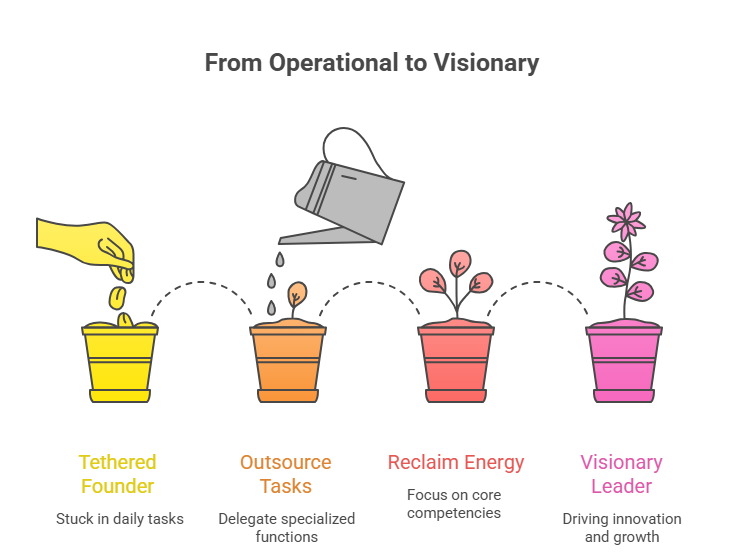
The most significant transformation is psychological. When a founder or a core team is no longer tethered to the help desk or manual data entry, they reclaim their role as visionaries.
By outsourcing specialized tasks, from technical SEO and server maintenance to customer service, you redirect your best energy toward:
- Brand Narrative: Telling a better story.
- Product Innovation: Designing what’s next.
- Market Expansion: Finding new audiences.
How to Choose the Right eCommerce Solution Provider
1. Industry Experience & Proven Pedigree
It isn’t enough for a provider to “know tech”; they must understand the nuances of your specific niche.
- Domain Expertise: A provider experienced in B2B (Bulk orders, tiered pricing) faces different challenges than one specializing in high-fashion B2C (flash sales, high return rates).
- Operational Foresight: Experienced partners don’t just build what you ask for; they anticipate hurdles like tax compliance across borders or complex shipping logistics that you might have missed.
2. Service Range: The “All-in-One” Advantage
Fragmented support, where one company handles your web code and another handles your Amazon listings, often leads to communication breakdowns.
- Custom Development: Can they build unique features (like a custom product builder) or are they limited to basic templates?
- Catalog & Marketplace Management: Managing a “Single Source of Truth” is vital. You want a partner who can sync your website’s inventory with marketplaces like Amazon, Walmart, and eBay simultaneously.
- The Ecosystem: Look for a partner who offers a “full-stack” approach, from the initial UI/UX design to back-end database management.
3. Technology Capabilities & Data Intelligence
In the modern landscape, “good enough” tech is a liability. Your provider should be leveraging:
- Modern Tech Stack: They should be proficient in headless commerce (decoupling the front end from the back end) or robust platforms like Shopify Plus, Magento (Adobe Commerce), or BigCommerce.
- Automation & AI: Do they use automated tools for price monitoring, stock replenishment alerts, or AI-driven chatbots?
- Actionable Analytics: A great provider doesn’t just give you a spreadsheet of sales; they provide dashboards that show Customer Acquisition Cost (CAC), Lifetime Value (LTV), and conversion funnels.
4. Scalability: Future-Proofing for Success
Your provider should be a “ceiling-breaker,” not a “bottleneck.”
- Elasticity: Can their servers and support teams handle a 500% spike in traffic during a Black Friday event or a viral social media moment?
- Global Readiness: If you plan to expand internationally, can they handle multi-currency transactions, localized language support, and regional shipping integrations?
| Factor | What to Ask the Provider |
| Experience | “Can you show me a case study of a brand in my industry that tripled its volume using your services?” |
| Services | “Do you provide end-to-end support, or will I need to hire another agency for marketplace management?” |
| Tech | “How do you handle API integrations with third-party logistics (3PL) and ERP systems?” |
| Scalability | “What is your protocol for handling sudden traffic surges or expanding into new international markets?” |
Conclusion
As eCommerce continues to evolve, businesses must adopt efficient strategies to manage operations and stay competitive.
From product catalog management to custom eCommerce development, specialized eCommerce support services enable brands to streamline workflows, enhance customer experiences, and scale their online operations.
By partnering with reliable eCommerce solution providers, businesses can focus on growth while ensuring that critical ecommerce processes run smoothly and efficiently.
FAQs
1. What are eCommerce support services?
eCommerce support services include solutions such as catalog management, order processing, and customer service. These services help businesses improve efficiency, reduce manual tasks, and deliver better customer experiences across online platforms.
2. Why are eCommerce support services important?
eCommerce support services are important because they streamline operations and improve scalability. Additionally, they allow businesses to focus on growth while ensuring that backend processes and customer interactions are handled efficiently.
3.What does an eCommerce solutions provider do?
An eCommerce solutions provider offers services such as store development, system integration, and operational support. These providers help businesses manage online stores, optimize workflows, and scale efficiently using technology-driven solutions.
4. How do eCommerce solutions services improve sales?
eCommerce solutions services improve sales by enhancing customer experience, optimizing product listings, and reducing operational inefficiencies. As a result, businesses can increase conversions and maintain consistent performance across sales channels.
5. What is an ebusiness solutions company?
An ebusiness solutions company provides digital tools and services to manage online operations. These include eCommerce platforms, customer service systems, and automation tools that improve efficiency and support long-term business growth.