


A Complete Guide to Accounts Receivable Services: Strategies, Benefits, and Solutions

Last updated on May 22nd, 2026

You closed the sale, but the cash still hasn’t arrived.
This is the silent problem most businesses underestimate. Revenue looks strong on paper, yet operations feel tight, growth slows down, and financial decisions become reactive. The issue isn’t sales, it’s what happens after the sale.
This is where accounts receivables services become critical. They bridge the gap between delivering value and actually getting paid. However, managing receivables today isn’t just about sending invoices; it requires structured processes, smart automation, and strategic decision-making. Businesses that master this don’t just collect faster, they scale faster. Streamline collections and improve financial visibility with Vserve’s accounts receivable support solutions today.
Table of Contents
What Are Accounts Receivable Services?
Why Accounts Receivable Is Critical for Cash Flow
The Accounts Receivable Process Explained
Strategies for Effective Accounts Receivable Management
The Role of AR Automation, Compliance, and Security
How AR Analytics Improves Decision-Making
Benefits of Outsourcing Accounts Receivable Services
Industry-Specific Accounts Receivable Solutions
What Are Accounts Receivable Services?
Accounts receivable services refer to the management of incoming payments, from invoice creation and delivery to collections, reconciliation, and reporting.
Instead of treating receivables as a simple accounting task, modern businesses use accounts receivable services for small businesses to create structured systems that ensure consistent and predictable cash inflow. Additionally, these services improve visibility, reduce delays, and enhance financial control.
Improve cash flow faster by optimizing receivables processes with expert strategies, automation, and dedicated support
Why Accounts Receivable Is Critical for Cash Flow
Accounts receivable isn’t just a line item; it’s one of the most important drivers of working capital.
When managed effectively, AR helps businesses:
- Maintain steady cash flow
- Improve liquidity and working capital
- Strengthen customer relationships
- Increase financial predictability
However, poor receivables management leads to delayed payments, higher bad debt, and operational inefficiencies. Therefore, optimizing AR is essential for sustainable growth.
The Accounts Receivable Process Explained
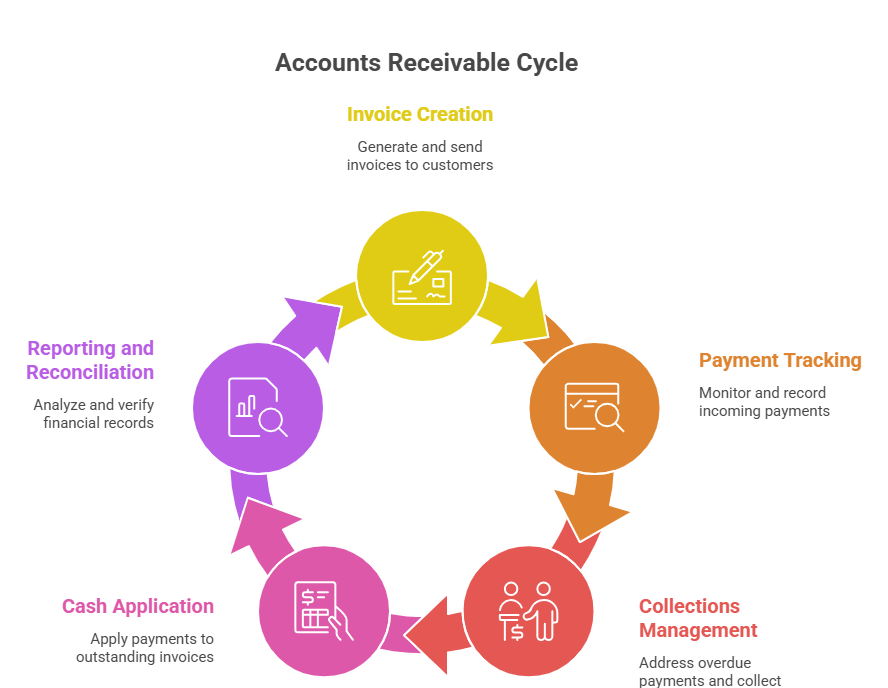
At its core, the accounts receivable process connects sales to cash collection. While it may seem straightforward, it involves multiple steps that must work seamlessly together.
This process includes:
- Invoice creation and delivery
- Payment tracking
- Collections management
- Cash application
Consequently, even small inefficiencies in this process can create significant cash flow disruptions.
Key Steps in the Accounts Receivable Process
A well-structured AR process typically includes the following steps:
1. Credit Assessment and Approval
Before extending credit, businesses evaluate a customer’s financial reliability. This reduces the risk of late payments or bad debt.
2. Invoice Generation and Delivery
Invoices must be accurate, clear, and sent promptly. Delayed or incorrect invoices often lead to payment delays.
3. Recording and Tracking Receivables
Each transaction is recorded to maintain visibility into outstanding payments and overall financial health.
4. Monitoring and Collections
Businesses track overdue invoices and follow up through structured communication strategies.
5. Dispute Resolution
Payment delays often arise from disputes. Addressing these quickly ensures smoother collections.
6. Payment Processing and Cash Application
Payments are received, matched to invoices, and recorded accurately to maintain financial clarity.
7. Reconciliation and Reporting
Financial records are reviewed regularly to ensure accuracy and provide insights into AR performance.
Strategies for Effective Accounts Receivable Management
To improve receivables performance, businesses should adopt the following strategies:
Establish Clear Credit Policies
Setting clear credit terms reduces risk and ensures consistency across transactions.
Automate Invoicing and Reminders
Automation ensures invoices are sent on time and follow-ups are consistent.
Improve Customer Communication
Proactive communication reduces disputes and encourages timely payments.
Implement Structured Collection Strategies
Segmenting customers and applying tailored follow-up strategies improves recovery rates.
Track Key Performance Metrics
Monitoring KPIs like DSO and collection efficiency helps identify areas for improvement.
The Role of AR Automation, Compliance, and Security
As accounts receivable processes become more complex, businesses need faster and smarter ways to manage collections. AR automation helps streamline routine tasks, reduce delays, and improve accuracy, allowing companies to strengthen cash flow while focusing more on growth.
- AR Automation
Automation plays a crucial role in modern receivables management by replacing repetitive manual tasks with faster digital workflows. It helps businesses reduce errors, accelerate invoicing, improve payment tracking, and increase overall efficiency across the accounts receivable process. - Compliance
Compliance ensures that receivables processes align with financial regulations, tax requirements, and internal policies. With standardized procedures and accurate recordkeeping, businesses can minimize risks, avoid penalties, and simplify audits or reporting obligations. - Security
Security is essential for protecting sensitive customer, billing, and financial data from unauthorized access or cyber threats. Strong security measures such as encryption, access controls, and secure payment systems help build trust while safeguarding company information.
How AR Analytics Improves Decision-Making
Data-driven insights transform accounts receivable from a reactive process into a strategic function.
With AR analytics, businesses can:
- Forecast cash flow more accurately
- Identify high-risk customers
- Optimize collection strategies
- Improve financial planning
Therefore, analytics not only improve efficiency but also support better business decisions.
Benefits of Outsourcing Accounts Receivable Services
Managing receivables internally can be resource-intensive and difficult to scale. This is why many businesses choose to outsource accounts receivable services.
With account receivables outsourcing, companies can:
- Reduce administrative workload
- Improve collection speed
- Access skilled professionals
- Lower operational costs
Additionally, outsourcing allows internal teams to focus on strategic initiatives rather than repetitive tasks.
Industry-Specific Accounts Receivable Solutions
Different industries require tailored receivables strategies.
- Accounts receivable services for real estate help manage complex billing cycles for property acquisition and selling.
- Accounts receivable services for manufacturing companies support high-volume transactions and vendor coordination.
- Accounts receivable services for healthcare providers streamline patient billing, insurance claims follow-ups, and payment collections.
- Accounts receivable services for law firms improve trust, accounting, invoice tracking, and timely client payments.
- Accounts receivable services for logistics companies handle freight billing, shipment-based invoicing, and faster collections.
- Accounts receivable services for e-commerce businesses manage large order volumes, payment reconciliation, and chargeback resolution.
Therefore, industry-specific solutions improve accuracy, efficiency, and overall performance.
Common Accounts Receivable Challenges
Managing receivables manually creates several challenges, especially as businesses scale:
- High volume of invoices leading to errors
- Delayed collections and inconsistent follow-ups
- Lack of real-time visibility into receivables
- Increasing days sales outstanding (DSO)
- Risk of bad debt and write-offs
As a result, businesses often struggle to maintain healthy cash flow despite strong sales performance.
Why Businesses Choose Vserve
Optimizing accounts receivable requires more than just tools; it requires expertise, scalability, and consistency. Vserve delivers:
- End-to-End AR Management: From invoicing to collections
- Scalable Solutions: Designed for growing businesses
- Industry Expertise: Tailored services for healthcare, manufacturing, and more
- Cost Efficiency: Reduce overhead while improving performance
- Faster Cash Flow: Improve collections and reduce delays
With Vserve, businesses gain a reliable partner that transforms receivables into a growth driver.
Frequently Asked Questions
1. How long should it take to collect payments from customers?
The ideal timeline depends on your payment terms, but most businesses aim to collect within 30 to 45 days. If payments consistently exceed this window, it may indicate inefficiencies in invoicing, follow-ups, or credit policies that need immediate improvement.
2. What are the early warning signs of AR process inefficiency?
Common signs include increasing overdue invoices, frequent payment disputes, rising DSO, and heavy reliance on manual tracking. If your team spends more time chasing payments than analyzing financial data, your AR process likely needs optimization.
3. Can small businesses benefit from outsourcing receivables?
Yes, small businesses often benefit significantly because outsourcing provides access to skilled professionals without the cost of building an internal team. It also allows them to scale operations efficiently while maintaining consistent cash flow management practices.
4. How do you handle customers who consistently pay late?
Start with structured reminders and clear communication. If delays continue, consider adjusting credit terms, offering incentives for early payments, or implementing stricter policies. Consistency in follow-ups is key to improving payment behavior over time.
5. What technology is essential for modern AR management?
Modern AR management relies on automation tools, integrated accounting systems, and analytics dashboards. These technologies streamline invoicing, improve tracking, and provide real-time insights, enabling businesses to manage receivables more efficiently and make informed financial decisions.
Related Services We Offer
Accounts Receivable Services for eCommerce Businesses Accounts Receivable Services for Manufacturing Companies Accounts Receivable Services for Real Estate Firms Accounts Receivable Services for Logistics & Transportation Accounts Receivable Services for SaaS Companies Accounts Receivable Services for Law Firms Accounts Receivable Services for Educational Institutions Accounts Receivable Services for IT & Software Companies Accounts Receivable Services for Retail Businesses Accounts Receivable Services for Travel Agencies Accounts Receivable Services for Construction Companies Accounts Receivable Services for Consulting Firms Accounts Receivable Services for Dispute Management Accounts Receivable Services for Collections and Follow-up Accounts Receivable Services for Cash Application Accounts Receivable Services for Reporting and Dashboard Accounts Receivable Services for Automation and AI-Driven Solutions Accounts Receivable for Credit Management and Risk Assessment Accounts Receivable Services for Reconciliation and Audit Support Accounts Receivable Services for Outsourcing for Small Businesses