


10 Best Practices for E-commerce Customer Support Services

Last updated on May 22nd, 2026

Shopping still feels good. It gives you a small rush of joy and a quiet sense of reward. Clicking ‘Buy now’ triggers the same little spark of happiness it always has. Only the setting has changed.
Once upon a time, customers walked into stores, touched fabrics, tested gadgets, and spoke to staff more times than they could count. Now, the store lives inside a screen. The counter fits inside a phone. And the assistant here is invisible but more important than ever.
Since the pandemic years, online shopping has stopped being a convenience and started behaving like a habit. According to global trends, eCommerce growth continues to climb steadily in 2026. It brings customers from every time zone, every mood, every expectation. Pajamas are still the dress code, and tea sits at hand nearby. However, patience has grown thinner and thinner.
68% of consumers are willing to pay more for products and services from brands that deliver good customer service. This highlights how strong support can directly impact purchasing behavior and customer value. Great e commerce customer service listens, responds, and fixes things before patience wears thin.
Table of Contents
- What Is eCommerce Customer Service?
- 10 Best Practices eCommerce Customer Support Services Follow
- FAQs
- Conclusion
What Is eCommerce Customer Service?
eCommerce customer service is the system that supports customers before, during, and after they make an online purchase. It includes chat, email, phone, social media, and help desks. Nowadays, there is increasing automation layered with human judgment.
Strong ecommerce customer support leads to loyal buyers and repeat orders. It also leads to better reviews and a competitive edge that price alone cannot win.
Many brands today rely on outsourced teams to deliver e-commerce integrated customer service, allowing them to scale quickly while maintaining quality.
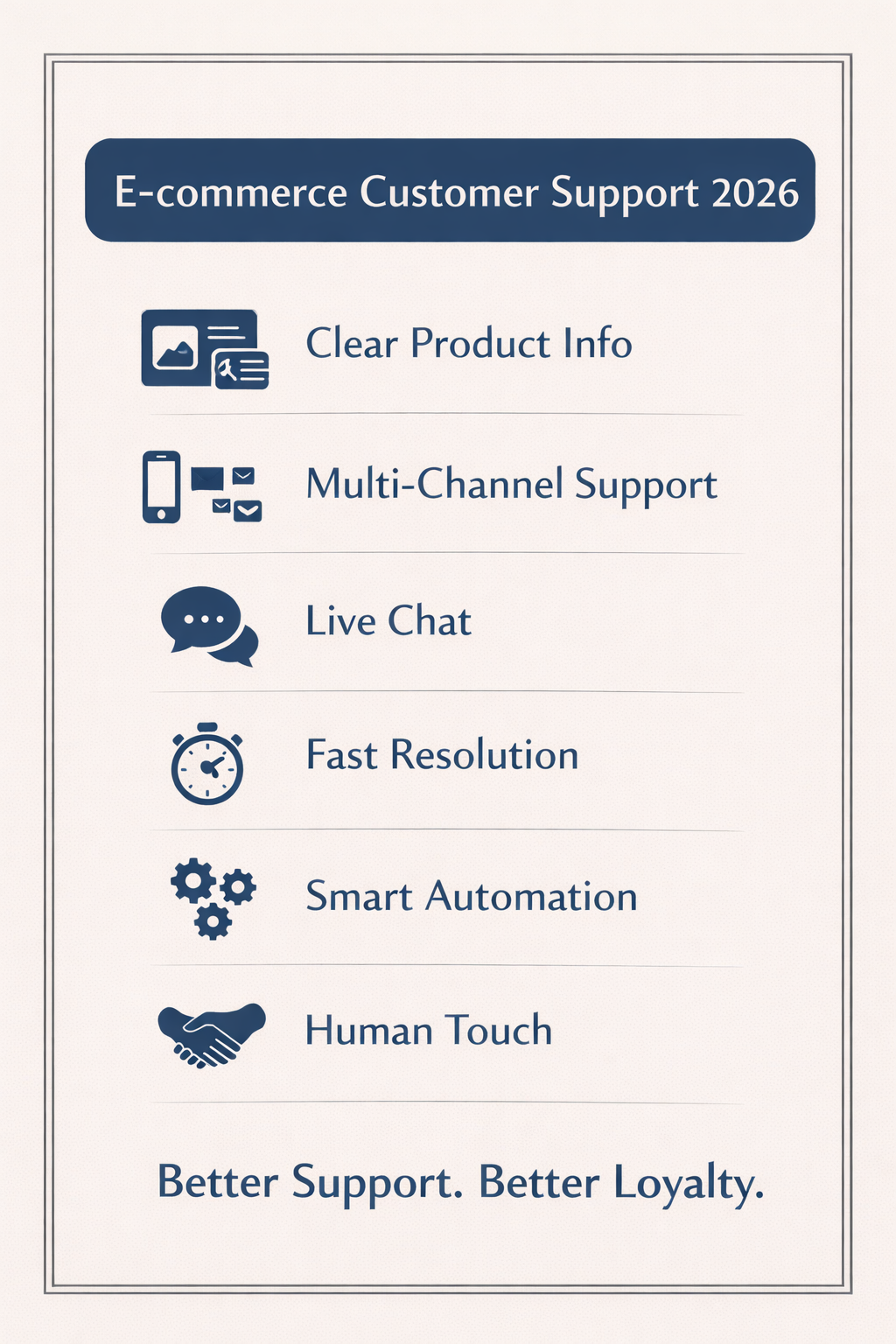
Enhance customer satisfaction by applying proven support practices, improving response speed, and boosting loyalty effectively
10 Best Practices eCommerce Customer Support Services Follow
1. A Well-Informed and Honest Product Catalog Will Benefit You
One of the most overlooked e-commerce customer service best practices is prevention. Customers reach support when something feels missing. It may be unclear descriptions or confusing pricing. It may be about Images that do not show all the facts or broken discount codes.
A strong catalog answers questions before they are asked. It has clear descriptions, accurate prices, and visible CTAs. You will find multiple images, short videos, and honest limitations.
The fewer doubts a customer has, the less they need to reach out.
2. Create a Social Media Presence
Customer service does not live only on your website anymore. Social media has become a support desk with emojis. Customers message brands the same way they text friends. According to recent studies, nearly half of younger consumers contact businesses through social platforms.
Now, businesses have no option but to respond. It is modern customer support for eCommerce in motion.
3. Provide Customers With Various Channels
Different customers prefer different paths. Some call, some email, and others chat. Many scroll social media. Limiting communication channels limits trust.
A true e-commerce integrated customer service model blends phone, chat, email, and social support into one connected experience.

4. Enable Live Chat for Your Online Shop
Live chat remains one of the most preferred support channels in 2026. It is fast and feels less confrontational. Agents can manage multiple chats at once, increasing efficiency without sacrificing warmth. Live chat improves conversion rates and reduces cart abandonment when used correctly.
5. Make Sure That You Accomplish FCR
First Contact Resolution matters more than ever. Customers want answers, not conversations that are not fruitful. Solving issues during the first interaction builds confidence and lowers frustration.
High FCR rates are a cornerstone of eCommerce customer service best practices.
6. Provide Customers With Knowledge to Resolve Concerns
Self-service is not avoidance but empowerment. FAQs, help articles, video guides, and searchable knowledge bases allow customers to solve problems on their own terms. Many prefer this.
Smart eCommerce customer support includes teaching customers how to help themselves.
7. You Should Always Prioritize Proactive Customer Service
Reactive support waits, and proactive support anticipates what is needed by the customers. It is best when shipping delays, stock issues, and payment failures occur that these should be communicated to customers before they ask. This will increase the trust the customers have for the business.
8. Improve Your Customer Service Process with Automation
Automation is not to replace humans, but to help them perform better. Canned responses, chatbots for basic queries, and automated follow-ups are being increasingly used by businesses. These reduce repetitive tasks and allow agents to focus on real problems.
Balanced automation is essential for scalable e commerce customer service.

9. Personalized Support May Help You Make the Most of Every Interaction
Customers remember how you made them feel. Personalization can be as simple as using names and remembering preferences. They could also be about acknowledging past issues and offering relevant suggestions. This is where service changes into a relationship.
10. Listen and Ask For Feedback
Feedback gives you insights and direction about your products.
Surveys, reviews, and direct responses highlight gaps you may not see internally. Listening keeps your service human.

FAQs
1. What makes e-commerce customer service different from traditional service?
It relies on speed, clarity, and multi-channel access without physical interaction.
2. Why is customer support critical for online businesses?
It directly affects retention, trust, and repeat purchases.
3. Can small businesses afford professional eCommerce customer support?
Yes, outsourcing makes quality support scalable and cost-effective.
4. Is automation harmful to customer experience?
No, when combined with human oversight, it improves response times.
5. How does integrated support improve customer satisfaction?
It creates consistency across all communication channels.
Conclusion
Today, eCommerce continues to grow, and customers continue to expect more. Behind every smooth order is a support system working quietly. Efficiency, personalization, and easy access are the basics, and customers are now expecting it all.
Strong e-commerce customer care services company partnerships help brands meet these expectations without burning internal resources.
Vserve delivers reliable, scalable, and human-first eCommerce customer support services. From live chat and email to multi-platform customer care, Vserve helps brands stay responsive consistently. It does not matter how fast the market moves.
Suggested Reads
https://vservesolution.com/blogs/3-outsource-customer-service-models-support-global-fashion-shoppers/ – Outsourcing models tailored for global fashion eCommerce brands
https://vservesolution.com/blogs/top-10-valued-skills-in-customer-support-to-enhance-customer-experience/ – Skills that define excellent modern customer support teams
https://vservesolution.com/blogs/manage-remote-ecommerce-customer-support-team/ – Managing remote teams without losing service quality
https://vservesolution.com/blogs/why-your-ecommerce-business-needs-multi-platform-customer-support/ – Importance of supporting customers across multiple platforms