
A Complete Guide to eCommerce Supply Chain Services and Operations

Last updated on June 22nd, 2026

eCommerce businesses depend on more than just great products and effective marketing. Behind every successful online order is a supply chain that identifies reliable suppliers, evaluates risks, manages performance, and ensures products reach customers on time.
As supply networks become increasingly global, businesses need structured supplier management processes to maintain efficiency and resilience. According to the National Institute of Standards and Technology (NIST), organizations should continuously identify, assess, and respond to supply chain risks throughout the supplier lifecycle. This approach helps improve quality, resilience, and operational continuity.
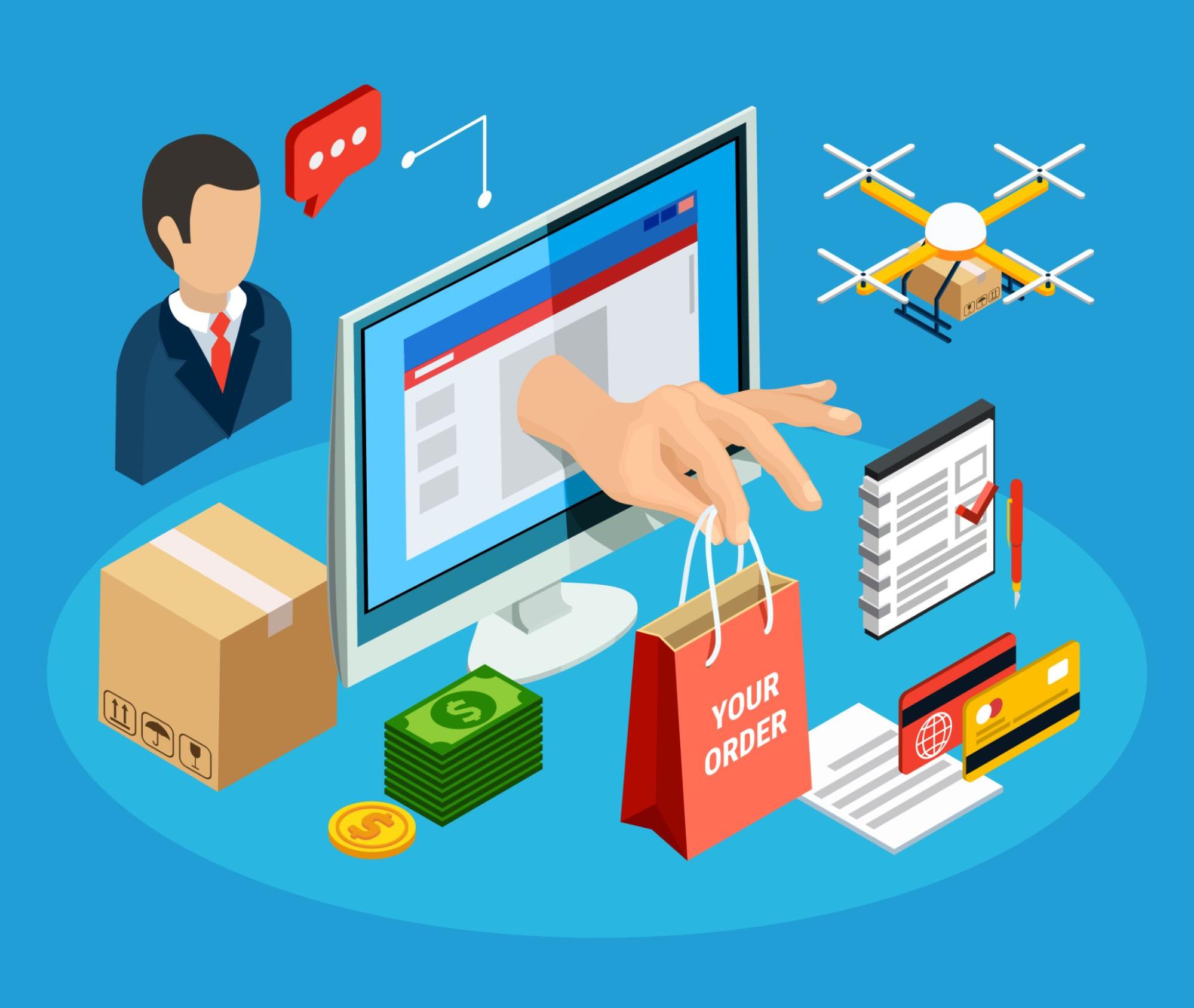
This guide explores how eCommerce supply chain services support supplier discovery, qualification, evaluation, onboarding, and ongoing performance management.
Table of Contents
What Are eCommerce Supply Chain Services?
Supplier Identification vs Supplier Qualification vs Supplier Evaluation
The Modern Supplier Lifecycle Process
Supplier Risk Assessment Framework
Supplier Segmentation Using the Kraljic Matrix
How AI Is Transforming Supplier Identification and Evaluation
What Are eCommerce Supply Chain Services?
E-commerce supply chain services encompass the processes, technologies, and operational support that help businesses efficiently manage the movement of goods from suppliers to end customers. These services typically include product sourcing, supplier management, inventory monitoring, procurement, logistics coordination, warehousing, and order fulfillment. By creating a more connected and streamlined supply chain, organizations can improve efficiency, reduce costs, and maintain consistent product availability.
To strengthen sourcing operations, many companies rely on supplier identification services to find qualified vendors that align with their quality, pricing, and delivery requirements. For businesses that source raw materials or manufactured products, supplier identification and qualification services for direct materials provide additional due diligence by evaluating supplier capabilities, production capacity, compliance standards, and overall reliability. These activities help reduce sourcing risks and ensure suppliers can support long-term operational needs.
Organizations also use supplier identification and RFQ management services to simplify the sourcing process by identifying potential vendors, managing requests for quotation, and comparing supplier proposals more efficiently. In addition, supplier benchmarking and performance comparison services enable procurement teams to evaluate suppliers against key metrics, including cost, quality, delivery performance, and responsiveness. Together, these services provide greater visibility into supplier performance, support informed decision-making, and help eCommerce businesses build more resilient and competitive supply chains.
Supplier Identification vs Supplier Qualification vs Supplier Evaluation
Many organizations mistakenly use these terms interchangeably when discussing procurement and sourcing activities. However, each process plays a distinct role within the broader supply chain and supplier management framework. Understanding these differences helps businesses apply the right strategies at the right stage of the procurement lifecycle.
| Stage | Purpose | Key Activities |
| Supplier Identification | Find potential suppliers | Market research, supplier discovery, sourcing databases |
| Supplier Qualification | Verify capability and compliance | Certifications, financial reviews, audits, capacity checks |
| Supplier Evaluation | Measure performance and suitability | Scorecards, KPIs, delivery analysis, quality assessments |
The procurement lifecycle generally follows this sequence:
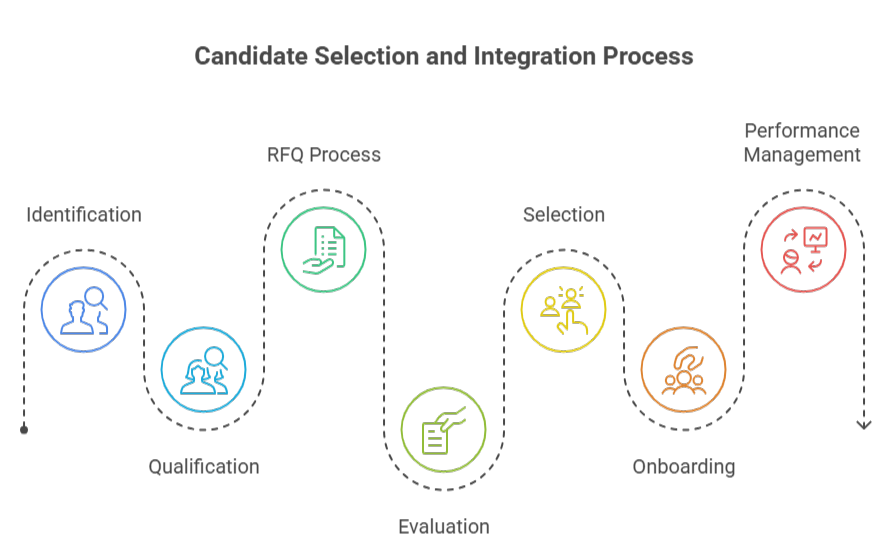
Effective supplier identification services help businesses create an initial supplier pool. Next, supplier identification and qualification services for direct materials verify whether suppliers can meet technical and production requirements. Finally, evaluation determines which suppliers provide the best long-term value.
The Modern Supplier Lifecycle Process
A mature supplier management strategy goes beyond simply selecting vendors—it focuses on building, evaluating, and continuously improving supplier relationships throughout the entire lifecycle. Each stage of the process plays a specific role in ensuring suppliers are reliable, cost-effective, and aligned with business goals. When managed properly, this structured approach improves procurement efficiency, reduces risk, and strengthens long-term supply chain performance.
1. Supplier Discovery
Organizations begin by identifying potential vendors through supplier identification services, which leverage industry databases, trade networks, sourcing platforms, and market intelligence to build a qualified supplier pool. This early stage ensures that businesses are not limited to familiar vendors and can access a broader, more competitive marketplace.
2. Qualification
At this stage, companies often rely on supplier identification and qualification services for direct materials to evaluate whether suppliers meet operational and compliance requirements. This includes assessing production capacity, quality certifications, regulatory adherence, financial stability, and geographic capabilities to ensure suppliers can reliably support demand.
3. RFQ Management
Procurement teams frequently use Supplier identification and RFQ management services to streamline the request-for-quotation process, manage supplier communications, and compare bids more efficiently. This structured approach improves transparency, accelerates decision-making, and helps secure more competitive pricing.
4. Selection and Contracting
Once suppliers are evaluated, businesses select the most suitable partners based on predefined criteria such as cost, quality, reliability, and service capability. Formal contracts are then negotiated and established to define expectations, responsibilities, pricing structures, and performance standards.
5. Onboarding
During onboarding, suppliers are integrated into procurement systems, compliance workflows, and communication channels. This step ensures that suppliers understand operational requirements and can begin fulfilling orders smoothly without disruptions.
6. Continuous Monitoring
Organizations conduct ongoing performance evaluations using supplier benchmarking and performance comparison services to assess delivery performance, quality consistency, and responsiveness over time. Regular monitoring helps identify gaps early and ensures suppliers continue to meet evolving business expectations.
Supplier Risk Assessment Framework
One of the most common weaknesses in supplier management programs is insufficient attention to risk evaluation across the supplier base. A strong risk framework helps organizations anticipate disruptions and make more informed sourcing decisions by assessing multiple dimensions of supplier risk.
Financial Risk includes factors such as creditworthiness, cash flow stability, and debt levels, which indicate whether a supplier can sustain operations over time. Operational Risk focuses on manufacturing capacity, production reliability, and resource availability to ensure suppliers can consistently meet demand requirements. Compliance Risk evaluates certifications, regulatory adherence, and environmental standards to ensure suppliers operate within legal and industry guidelines.
Geographic Risk considers external factors such as political instability, natural disaster exposure, and trade restrictions that may disrupt supply continuity. Cybersecurity Risk, increasingly important in digital supply chains, assesses a supplier’s ability to protect sensitive data and maintain secure systems. As emphasized by NIST, organizations should continuously identify and assess third-party risks throughout the entire supplier lifecycle.
By integrating structured risk scoring into procurement decisions, businesses can proactively reduce disruptions, improve resilience, and build a more stable and dependable supply chain network.
Real-World Example
One example of supplier qualification at scale is Walmart.
Before becoming an approved supplier, businesses must complete qualification requirements, provide company information, and undergo onboarding processes designed to validate supplier readiness. Walmart clearly outlines qualification steps and supplier requirements before vendors can participate in its network.
This demonstrates why supplier identification and qualification services for direct materials are critical. Large organizations do not simply select suppliers based on price. They evaluate operational readiness, compliance, scalability, and long-term reliability before onboarding suppliers.
Supplier Segmentation Using the Kraljic Matrix
Supplier management is most effective when organizations recognize that not all vendors carry the same level of importance, risk, or strategic value. Treating every supplier with equal attention can lead to inefficiencies and missed opportunities for optimization. To address this, procurement teams often use structured frameworks to prioritize and manage supplier relationships more effectively.
The Kraljic Matrix segments suppliers into four categories:
Strategic Suppliers
- High value
- High supply risk
- Require close collaboration
Leverage Suppliers
- High value
- Low supply risk
- Strong negotiation opportunities
Bottleneck Suppliers
- Low value
- High supply risk
- Require contingency planning
Non-Critical Suppliers
- Low value
- Low risk
- Standard procurement management
When combined with supplier benchmarking and performance comparison services, this framework helps organizations allocate resources more effectively.
How AI Is Transforming Supplier Identification and Evaluation
Artificial intelligence is reshaping how procurement teams identify, evaluate, and manage suppliers across increasingly complex global supply chains. Instead of relying solely on manual research and periodic reviews, organizations now use AI-driven tools to process large volumes of supplier data in real time. This shift enables faster decisions, improved accuracy, and stronger overall supplier visibility.
Automated Supplier Discovery
AI is significantly improving supplier identification services by scanning and analyzing large supplier databases, online directories, and market intelligence sources. These systems can quickly surface qualified vendors based on predefined criteria such as location, capability, pricing, and industry relevance. As a result, procurement teams can identify suitable suppliers in a fraction of the time compared to traditional manual sourcing methods.
Faster Qualification
Modern supplier identification and qualification services for direct materials are increasingly supported by AI that reviews and validates supplier credentials. This includes analyzing certifications, financial statements, compliance records, and historical performance data. By automating much of this evaluation process, organizations can reduce onboarding time while improving the accuracy of supplier risk assessments.
Intelligent RFQ Analysis
Advanced Supplier identification and RFQ management services now use AI to compare supplier quotations, pricing structures, and contract terms with far greater precision. These systems can detect pricing anomalies, highlight cost-saving opportunities, and benchmark offers against historical trends. This allows procurement teams to make more informed sourcing decisions with less manual effort.
Predictive Risk Monitoring
AI-powered systems can continuously monitor supplier-related risks by analyzing financial health indicators, geopolitical developments, and operational performance signals. This enables early detection of potential disruptions before they impact the supply chain. As a result, procurement teams can proactively adjust sourcing strategies and reduce exposure to high-risk suppliers.
Performance Benchmarking
Organizations increasingly rely on supplier benchmarking and performance comparison services enhanced by AI to evaluate suppliers on an ongoing basis rather than through periodic audits. These systems track metrics such as delivery performance, quality consistency, and responsiveness in real time. This continuous evaluation approach helps businesses maintain higher supplier standards and quickly address performance gaps.
Overall Impact
By integrating AI into supplier identification and evaluation processes, organizations achieve faster decision-making, lower procurement costs, and improved visibility across their entire supplier ecosystem. This transformation allows procurement teams to shift from reactive management to a more strategic, data-driven approach.
Conclusion
Strong ecommerce supply chain operations require much more than finding vendors and negotiating prices. Organizations must establish structured processes for supplier identification, qualification, evaluation, onboarding, risk management, and performance monitoring.
By leveraging supplier identification services, supplier identification and qualification services for direct materials, Supplier identification and RFQ management services, and supplier benchmarking and performance comparison services, businesses can create resilient supply chains that support growth, reduce risk, and improve operational performance.
Companies that combine these best practices with AI-powered procurement technology gain greater visibility, better supplier relationships, and stronger competitive advantages in increasingly complex global markets.
Frequently Asked Questions
1. How often should supplier contracts be reviewed?
Supplier contracts should generally be reviewed annually. High-risk or strategic suppliers may require quarterly reviews to ensure pricing, service levels, compliance obligations, and operational requirements continue to align with business objectives and market conditions.
2. What documents are commonly required during supplier onboarding?
Most organizations request business registrations, tax documents, insurance certificates, quality certifications, financial statements, banking information, and compliance documentation. Requirements vary depending on industry regulations, procurement policies, and supplier risk levels.
3. Can small businesses benefit from formal supplier evaluation programs?
Yes. Small businesses often face greater operational risk from supplier disruptions. Even a simple evaluation framework can improve supplier selection, reduce procurement mistakes, and create stronger long-term supplier relationships that support growth.
4. What is the difference between supplier performance management and supplier relationship management?
Supplier performance management focuses on metrics such as quality, delivery, and compliance. Supplier relationship management focuses on collaboration, communication, innovation, and strategic partnership development to create mutual long-term value.