

Procurement and Sourcing Outsourcing: How to Choose the Right Model, Measure Success, and Scale Operations

Last updated on August 11th, 2026

Procurement outsourcing has evolved into a strategic business function rather than a simple cost-cutting measure. Modern organizations now rely on structured procurement outsourcing services to improve efficiency, gain specialist expertise, and scale operations without increasing internal overhead.
Report suggests that structured procurement systems are essential for transparency, efficiency, and improved supplier performance across complex organizations.
This shift has increased demand for structured procurement advice support services and procurement advice and support service models that help organizations redesign procurement workflows, reduce risk, and improve supplier outcomes. Many enterprises now engage procurement outsourcing service providers not only for execution but also for transformation and strategy.
Table of Contents
Procurement Functions That Can Be Outsourced
Procurement Outsourcing Models and Selection Framework
Step-by-Step Implementation Roadmap
Real-World Example: How Large Institutions Structure Procurement
Procurement Outsourcing KPIs and Performance Metrics
Procurement Functions That Can Be Outsourced
Organizations often underestimate how many procurement activities can be delegated through procurement outsourcing services. These functions typically span the full procurement lifecycle:
Strategic sourcing activities such as supplier identification, category research, and contract negotiation are commonly handled by external experts. Tactical procurement tasks such as purchase order management, invoice validation, and supplier coordination are also frequently outsourced.
Even advisory functions are increasingly delegated through procurement advice support service and procurement advice and support service models. These include spend analysis, compliance monitoring, and procurement policy design.
When structured correctly, a procurement implementation service ensures that outsourced functions integrate smoothly into internal workflows rather than operating as isolated activities. This allows businesses to retain control while benefiting from external efficiency.

Procurement Outsourcing Models and Selection Framework
Choosing the right model is one of the most critical decisions in procurement transformation. Organizations typically adopt three core models within procurement outsourcing services:
- Full outsourcing, where end-to-end procurement operations are managed by procurement outsourcing service providers.
- Selective outsourcing, where only specific categories or processes are delegated.
- Hybrid outsourcing, where internal teams collaborate with external experts using shared responsibility structures.
A strong procurement advice support service helps businesses evaluate procurement maturity, spend complexity, and operational goals before selecting a model. Similarly, procurement advice and support service frameworks guide decision-makers in balancing cost efficiency with control.
A practical selection framework includes assessing procurement complexity, supplier ecosystem maturity, digital readiness, and internal capability gaps. The right procurement implementation service ensures the chosen model aligns with long-term business strategy rather than short-term savings.
Optimize spend analysis and scale operations smoothly with specialized procurement outsourcing services
Step-by-Step Procurement Outsourcing Implementation Roadmap
Successful procurement transformation requires a structured roadmap rather than ad hoc delegation.
First, organizations must conduct a baseline assessment of procurement spend, supplier performance, and internal capability gaps. This is often supported by procurement advice support service experts who specialize in operational diagnostics.
Second, the outsourcing scope must be defined clearly, including which categories and workflows will transition to procurement outsourcing services.
Third, organizations should select procurement outsourcing service providers based on capability, scalability, and technology integration.
Fourth, a procurement implementation service is deployed to integrate systems, align workflows, and train internal teams.
Finally, continuous optimization ensures procurement remains aligned with evolving business needs.
Throughout this process, procurement advice and support service teams play a key role in ensuring governance, risk control, and performance alignment.
Real-World Example: How Institutions Structure Procurement Outsourcing
The OECD public procurement framework provides a strong real-world example of structured procurement governance across large-scale public sector operations. It emphasizes transparency, value for money, standardized procurement procedures, and accountability mechanisms that guide how governments and institutions manage sourcing activities:
In practice, frameworks like this demonstrate how procurement outsourcing services can support large institutions by standardizing supplier selection, improving compliance, and driving cost efficiency across multiple regions and departments.
Organizations that adopt similar governance structures often rely on procurement outsourcing service providers to manage operational procurement while maintaining centralized policy control. This is where procurement advice support service and procurement implementation service models become critical for ensuring consistency, accountability, and alignment with strategic procurement goals.
Procurement Outsourcing KPIs and Performance Metrics
Measuring success is essential for any procurement transformation initiative. Organizations using procurement outsourcing services typically track a combination of operational and strategic KPIs.
Common metrics include procurement cycle time, cost savings achieved, supplier performance scores, and contract compliance rates.
Advanced organizations also measure value delivered by procurement outsourcing service providers in terms of innovation contribution, risk reduction, and process automation efficiency.
A strong procurement advice and support service framework ensures that KPIs are aligned with business goals rather than isolated operational metrics. Meanwhile, procurement implementation service teams help establish dashboards and reporting systems that provide real-time visibility into procurement performance.
Future Trends in Procurement and Sourcing Outsourcing
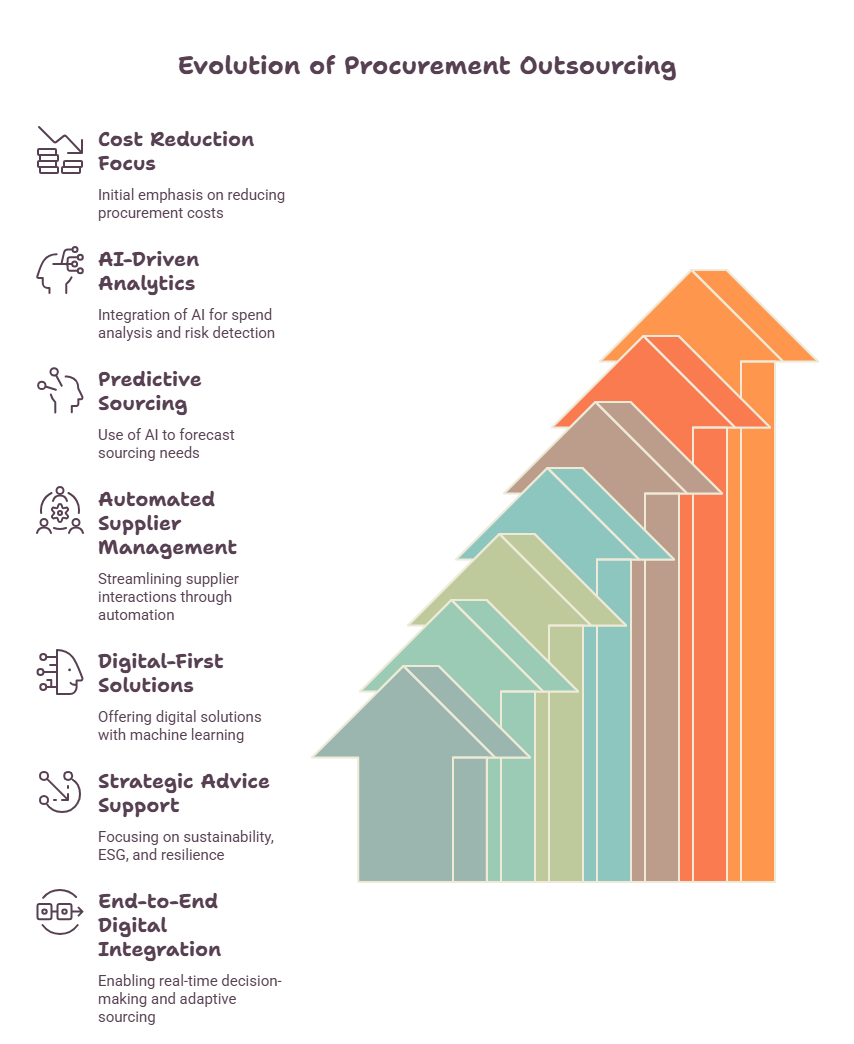
Procurement outsourcing is rapidly evolving beyond cost reduction. AI-driven analytics, predictive sourcing, and automated supplier management are reshaping procurement outsourcing services.
Procurement outsourcing service providers are increasingly offering digital-first solutions that integrate machine learning for spend analysis and supplier risk detection.
At the same time, procurement advice support service models are becoming more strategic, focusing on sustainability, ESG compliance, and supply chain resilience.
Future procurement implementation service frameworks will likely prioritize end-to-end digital integration, enabling real-time procurement decision-making and adaptive sourcing strategies.
Conclusion
Procurement outsourcing is no longer just an efficiency tool. It is a strategic capability that shapes how organizations manage suppliers, control costs, and scale operations. By leveraging procurement outsourcing services, businesses can access specialized expertise, improve visibility, and strengthen procurement performance.
With the right procurement outsourcing service providers, supported by structured procurement advice support service and procurement implementation service models, organizations can build resilient, scalable, and data-driven procurement ecosystems.
FAQs
1. How do procurement outsourcing contracts handle confidential supplier data?
Procurement outsourcing contracts typically include strict confidentiality clauses, encryption protocols, and access controls. Procurement outsourcing service providers are required to comply with international data protection standards and internal governance policies to ensure sensitive supplier and pricing data remains secure throughout all procurement operations.
2. Can small businesses benefit from procurement outsourcing services?
Yes, small businesses can benefit significantly from procurement outsourcing services by accessing expertise without hiring full-time procurement teams. Many use procurement advice support service solutions to improve purchasing decisions, optimize supplier selection, and reduce operational costs while maintaining flexibility and scalability.
3. What industries benefit most from procurement implementation service models?
Industries with complex supply chains, such as manufacturing, healthcare, and technology, benefit most. A procurement implementation service helps streamline sourcing, improve compliance, and ensure efficiency across high-volume procurement activities while integrating structured procurement advice and support service frameworks for better decision-making.
4. How long does it take to transition to outsourced procurement?
Transition timelines vary depending on complexity, but most organizations require three to six months. Procurement outsourcing service providers typically follow phased implementation using procurement implementation service frameworks to ensure minimal disruption while gradually shifting operational responsibilities and optimizing performance.