



Last updated on March 4th, 2026
Table of Contents
Why Supply Chain Efficiency Matters More Than Ever
The Hidden Cost of Shipping Losses
What Are Supply Chain Outsourcing Services
12 Furniture Scaling Systems That Reduce Losses
Choosing the Right Supply Chain BPO Vendors
How Supply Chain Managed Services Drive Predictable Growth
What to Look for in Supply Chain BPO Companies
Why This Matters for Furniture Businesses
Why Supply Chain Efficiency Matters More Than Ever
According to the Council of Supply Chain Management Professionals, logistics costs in the United States reached $2.3 trillion in 2022, accounting for 9.1 percent of the national GDP.
That number highlights one simple truth. Supply chain inefficiencies are expensive.
For furniture retailers and manufacturers, the risk is even higher. Oversized packaging, fragile materials, multi-location warehousing, and long-distance shipping create constant exposure to loss and damage. A single broken shipment can eliminate the profit from multiple successful orders.

This is why more business owners are investing in supply chain outsourcing services. It is no longer about cutting costs alone. It is about building a scalable system that prevents losses before they happen.
The Hidden Cost of Shipping Losses
Shipping losses are rarely just about damaged goods. They include:
- Replacement inventory
- Reverse logistics
- Customer refunds
- Storage fees
- Brand reputation damage
- Increased customer service workload
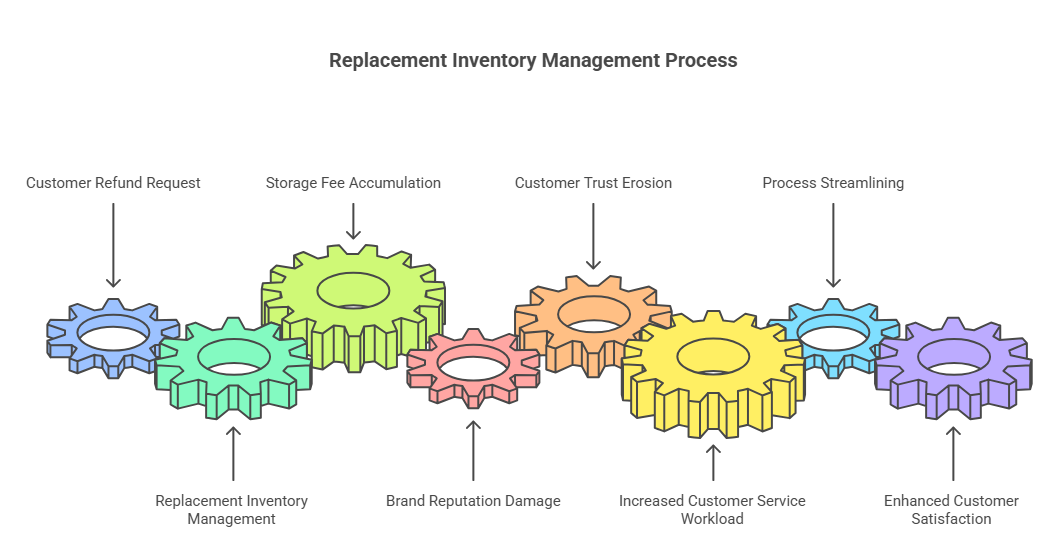
Furniture businesses, in particular, face high dimensional weight charges and packaging vulnerabilities. If your current supply chain absorbs these losses as part of normal operations, your margins are quietly shrinking.
Outsourcing to experienced supply chain bpo vendors helps eliminate reactive management and replaces it with preventive strategy.
What Are Supply Chain Outsourcing Services
Supply chain outsourcing services involve delegating logistics, procurement support, inventory coordination, fulfillment management, and operational optimization to specialized providers.
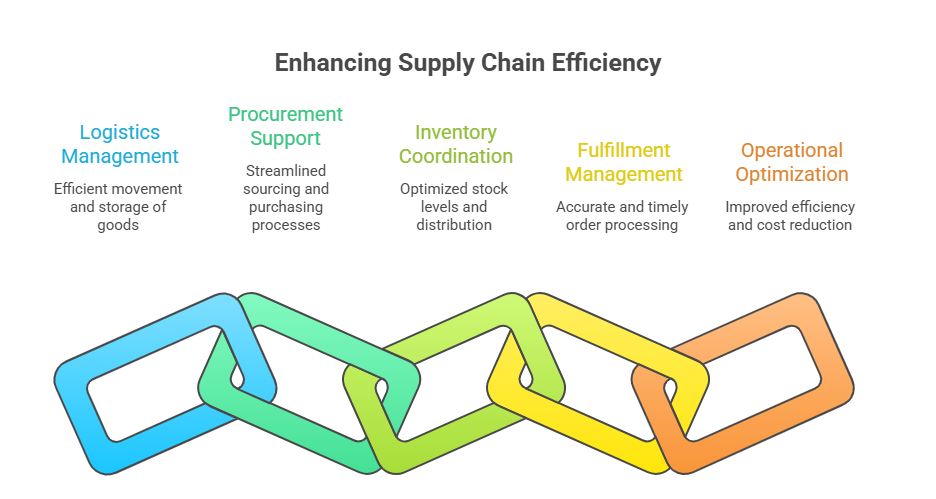
Instead of managing:
- Carrier coordination
- Warehouse monitoring
- Order routing
- Vendor communication
- Returns management
Your internal team can focus on growth, partnerships, and product expansion.
High-performing supply chain managed services providers act as operational architects. They identify bottlenecks, reduce shipping errors, and implement systems that scale with your order volume.
For furniture brands, this translates into structured packaging systems, dimensional cost control, and quality checkpoints that protect every shipment.
12 Furniture Scaling Systems That Reduce Losses by 40 Percent
Reducing shipping losses is not luck. It is system design. Below are twelve proven scaling systems that drive measurable impact:
1. Packaging Standardization Framework
Furniture is vulnerable at edges, corners, joints, and glass components. Without standardized packaging, protection varies per shipment.
A packaging standardization framework includes:
- Fixed material specifications for cartons and foam density
- Reinforced corner guards and edge protectors
- Defined pallet stacking guidelines
- Drop-test validation standards
Why it reduces losses:
Inconsistent packaging is one of the biggest causes of transit damage. Standardization ensures every SKU receives the same level of protection, eliminating weak packaging decisions. Fewer breakages mean fewer returns, replacements, and refund costs..
2. Dimensional Weight Optimization
Carriers charge based on dimensional weight, not just actual weight. Oversized cartons inflate shipping costs and increase handling stress.
Optimization involves:
- Redesigning carton dimensions
- Using modular packaging
- Removing unnecessary void space
- Flat-pack engineering where possible
Why it reduces losses:
Smaller, right-sized cartons reduce freight costs and lower handling strain. Less shifting inside the box also decreases internal damage. You cut both financial loss and product breakage.
3. Carrier Performance Scoring
Not all carriers perform equally. Some routes or providers have higher damage or delay rates.
A scoring system tracks:
- Damage percentage per carrier
- On-time delivery rate
- Claims resolution time
- Customer complaints by route
Why it reduces losses:
When performance is measured, accountability improves. Poor-performing carriers can be replaced or restricted to lower-risk routes. This immediately reduces recurring shipping failures.
4. Smart Route Planning
The more times a package is handled, the higher the chance of damage.
Smart routing analyzes:
- Direct vs multi-stop routes
- Regional warehouse allocation
- Cross-docking requirements
- Peak traffic risk zones
Why it reduces losses:
Fewer transfer points mean fewer loading and unloading cycles. For furniture, every handling touchpoint increases breakage risk. Reducing touches lowers physical damage significantly.
5. Real-Time Shipment Visibility
Delayed shipments often become damaged shipments. If issues are not detected early, recovery becomes expensive.
Visibility systems provide:
- Live tracking dashboards
- Automated delay alerts
- Exception notifications
- Temperature and handling monitoring for sensitive materials
Why it reduces losses:
Proactive intervention prevents escalation. If a shipment stalls, corrective action can be taken before customer dissatisfaction or product deterioration occurs.
6. Vendor Compliance Audits
Upstream packaging errors create downstream losses.
Audits focus on:
- Packaging material quality
- Carton sealing standards
- Pallet stacking compliance
- Label accuracy
Why it reduces losses:
If suppliers fail to meet standards, damage happens before goods even reach the warehouse. Enforcing compliance reduces the flow of vulnerable inventory into your distribution system.
7. Consolidated Freight Strategy
Shipping partial loads or fragmented shipments increases handling frequency and cost.
Consolidation includes:
- Full truckload planning
- Batch order grouping
- Regional delivery clustering
Why it reduces losses:
Consolidated shipments reduce loading cycles and transfer points. Less fragmentation means fewer opportunities for mishandling. It also reduces per-unit freight costs.
8. Warehouse Zoning Systems
Not all SKUs require the same storage and handling conditions.
Effective zoning involves:
- Heavy-item handling zones
- Fragile-item dedicated sections
- Clearly marked staging areas
- Defined forklift traffic paths
Why it reduces losses:
Improper warehouse handling causes a significant portion of damage. Zoning reduces accidental collisions, stacking errors, and misplacement of fragile furniture.
9. Quality Control Checkpoints
Many losses originate from defects that were never inspected before shipping.
Quality checkpoints include:
- Structural integrity checks
- Hardware completeness verification
- Packaging integrity confirmation
- Final photo documentation
Why it reduces losses:
Shipping defective products guarantees returns. Pre-dispatch inspections catch issues early, preventing expensive reverse logistics and refund cycles.
10. Returns Root Cause Analysis
If returns are not analyzed, the same problems repeat.
Root cause analysis tracks:
- Damage type patterns
- Specific SKU vulnerabilities
- Carrier-linked damage trends
- Regional delivery risks
Why it reduces losses:
Instead of treating returns as isolated incidents, patterns are identified and eliminated. Continuous improvement drives sustained reduction in loss rates.
11. Inventory Buffer Modeling
Stockouts lead to rushed fulfillment. Rushed fulfillment increases mistakes.
Buffer modeling involves:
- Safety stock calculations
- Lead time variability analysis
- Demand fluctuation planning
- Supplier reliability scoring
Why it reduces losses:
When inventory levels are stable, there is no pressure to expedite poorly packaged shipments. Emergency shipping often results in compromised packaging and higher damage rates.
12. Data-Driven Forecasting
Scaling furniture operations without forecasting creates operational chaos.
Forecasting uses:
- Historical sales data
- Seasonality patterns
- Promotional planning
- Regional demand analysis
Why it reduces losses:
Accurate forecasting prevents overstocking, understocking, and rushed production. When operations are planned calmly instead of reactively, packaging quality improves and errors decrease..
When implemented together, these systems can reduce shipping losses by up to 40 percent, especially for bulky furniture SKUs.
Choosing the Right Supply Chain BPO Vendors
Not all supply chain bpo vendors operate at the same strategic level. Business owners should evaluate providers based on:
- Experience with large, fragile product categories
- Technology integration capabilities
- Reporting transparency
- Dedicated operational support teams
- Scalable process documentation
The right partner does more than execute tasks. They bring structure, measurable KPIs, and continuous improvement frameworks.
A provider like Vserve integrates supply chain support within a broader operational ecosystem. This means fulfillment coordination, backend monitoring, and process refinement work together rather than in isolation.
How Supply Chain Managed Services Drive Predictable Growth
Growth without control increases risk. Supply chain managed services create predictable scalability through:
- Cost monitoring dashboards
- Standard operating procedures
- Centralized vendor communication
- Automated shipment tracking
- Ongoing optimization cycles
Instead of reacting to operational fires, your business operates within defined performance benchmarks.
For expanding furniture brands, this reduces dependency on manual oversight and protects profit margins during peak seasons.
What to Look for in Supply Chain BPO Companies
When comparing supply chain bpo companies, focus on these core factors:
Operational Maturity
Do they have structured systems or only manpower support?
Industry Familiarity
Do they understand the risks of oversized, fragile inventory?
Technology Stack
Can they integrate with your ERP and logistics software?
Reporting Accuracy
Are insights actionable and easy to interpret?
Scalability
Can they support growth across regions without compromising quality?
A well-structured supply chain outsourcing services partner becomes an extension of your business operations, not just a vendor.
Why This Matters for Furniture Businesses
Furniture scaling is operationally complex. As order volumes increase, so do:
- Handling touchpoints
- Carrier interactions
- Packaging stress points
- Delivery risk exposure
Without structured systems, shipping losses grow proportionally with revenue.
With optimized supply chain managed services, growth becomes stable rather than chaotic.
For business owners evaluating long-term scalability, the real question is not whether to outsource. It is how quickly inefficiencies can be corrected before they impact profitability.
FAQs
1. What are supply chain outsourcing services?
They involve delegating logistics, inventory coordination, and fulfillment management to specialized providers to improve efficiency and reduce losses.
2. How can outsourcing reduce shipping losses?
Outsourcing introduces standardized systems, performance tracking, and optimized packaging processes that prevent damage and errors.
3. Are supply chain bpo vendors suitable for small businesses?
Yes. Many providers offer scalable solutions that support both growing and established businesses.
4. What is the difference between supply chain managed services and traditional logistics?
Managed services provide continuous optimization and performance monitoring, while traditional logistics often focuses only on transportation.
5. How do I choose among supply chain bpo companies?
Evaluate their industry experience, technology integration, reporting transparency, and ability to scale with your business.
Shipping losses are not inevitable. They are often the result of fragmented systems and reactive processes. With the right supply chain outsourcing services partner, furniture businesses can reduce losses by up to 40 percent while building a foundation for sustainable growth.
For business owners ready to scale confidently, the next step is operational clarity.