


Last updated on January 8th, 2026
Are you planning to implement a product information management system and feeling that quiet pressure already? That feeling is quite normal. PIM implementations rarely fail because of the tool. They struggle because of the data that enters the tool.
Preparing product information before importing it into a PIM is not just a matter of technique. It is a determined move taken in the product management process. The way you source, cleanse, organize, and validate your product data decides whether your PIM transition feels smooth or stressful.
This product information management guide exists to remove friction early. It helps you prepare your data carefully so that the flow into your product information management system remains logical, predictable, and controlled.
Did you know that about 61% of retailers use PIM systems to standardize product information and improve data consistency, showing widespread adoption of PIM in ecommerce and retail sectors.
Before we get tactical, let us pause briefly and understand why PIM matters at all.
Table of Contents
How to Prepare Your Product Information for PIM
 Why Do You Need a PIM
 Why Do You Need a PIM
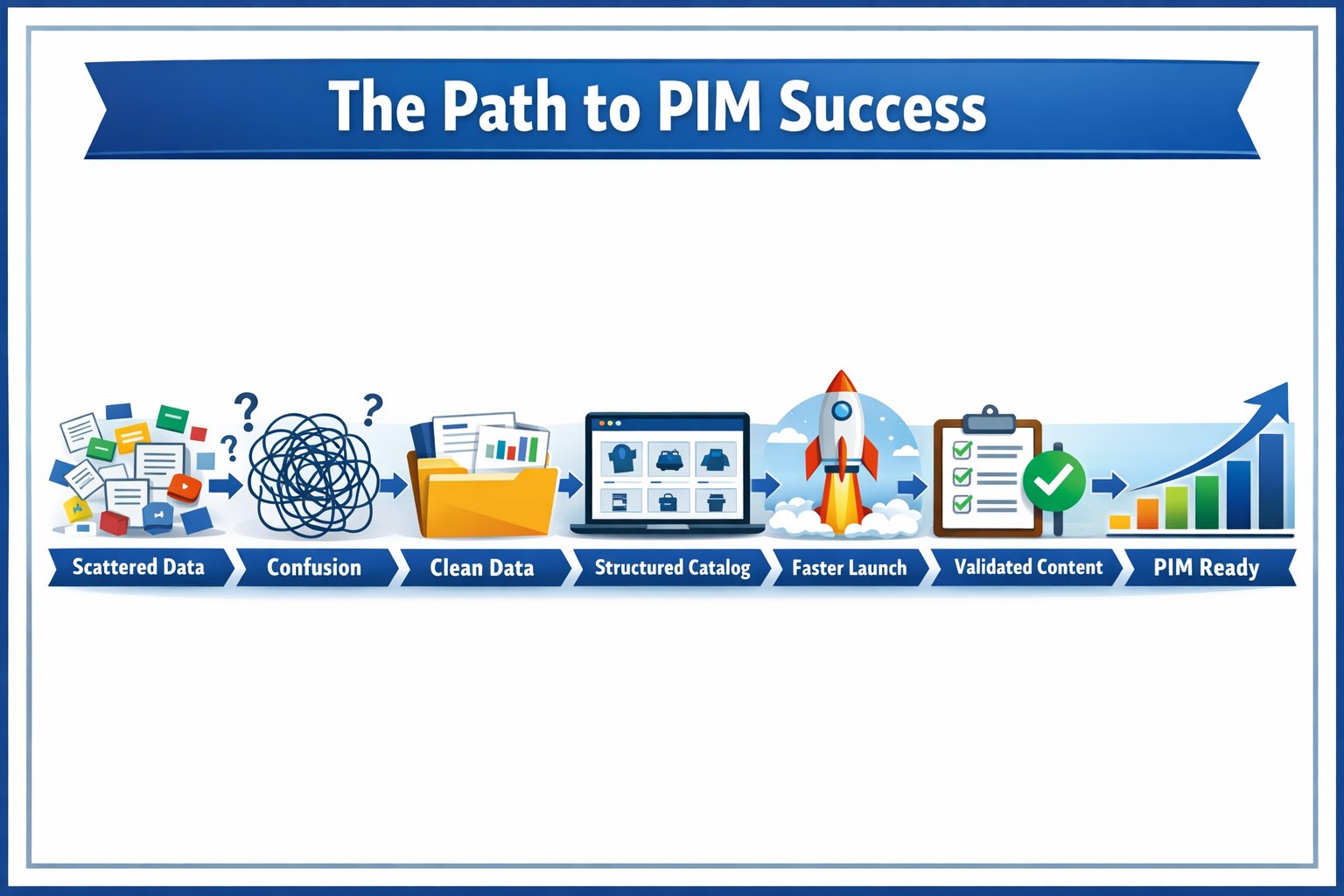
Traditional product data handling gives rise to a lot of confusion. Spreadsheets live in silos. Teams work without transparency. Product launch management process timelines stretch because data is incomplete. Multiple sales channels demand different formats. Manual catalog updates become routine chaos.
A product information management system solves this quietly. PIM product information management creates a central hub. It is called the one version of truth. One place where product data, assets, attributes, and updates live together and connect with each other. This supports product development and lifecycle management, speeds up product launches, and aligns teams.
For eCommerce PIM environments especially, consistency while moving through channels is essential today. Customers notice mismatches instantly.
How to Prepare Your Product Information for PIM
Follow the steps below to prepare your data for success over a long period of time with PIM solutions. These steps support better product lifecycle management systems and help extract real value from your product information.
Identify Product Data Goals Using Product Management Systems
Start with intention. Ask what you want to achieve with your product information management system. Do you want faster launches, fewer errors, or better omnichannel consistency?
Define the scope clearly. Identify product lists, and decide required attributes. List digital assets. This step works with the best product management frameworks because clarity at the beginning prevents rework later.
Source Product Information Across Product Lifecycle Management Systems
Once goals are clear, find your data. Product data usually hides across ERP systems, DAM tools, eCommerce platforms, vendor catalogs, and emails. Collect everything.
Most product management systems accept CSV, XLSX, and Excel formats. If data already lives in one place, importing becomes simple. If it comes from ERP or legacy systems, conversion is required before feeding it into the product information management system.
This sourcing stage often takes longer than expected, but it is seen to happen commonly.
Unify Data for PIM Product Information Management
Siloed data does not speak the same language. Unification means consolidation. Bring data into shared spreadsheets and folders. Work with teams in different departments. Understand conflicts, and resolve mismatches.
Organize files by product type, category, or URL. This being transparent simplifies the PIM implementation and improves the product management process across teams.

Cleanse Data to Strengthen Product Data Management
Data cleansing sounds dull, but this is where accuracy is born.
Normalize attributes and labels. Remove duplicates, and fix pricing conflicts. Rename attributes so they link clearly to products. Clean data supports strong product data management and reduces errors happening downstream. Remember that clean data moves faster.
Classify Products for PIM eCommerce and eCommerce PIM
Classification shapes customer experience. Define taxonomy before migration. Categories must make sense internally and externally. Many businesses follow UNSPSC, a globally accepted standard.
Clear classification supports PIM eCommerce platforms and enhances movement, filtering, and discoverability for customers.
Finalize Your Catalog Structure for PIM Solutions
PIM is not just storage within a structure. Design catalog hierarchies that reflect your industry and product logic. Tree-based structures with families, categories, and attributes work well.
A thoughtful structure supports product launch management process efficiency and helps PIM solutions deliver maximum value across channels.
Validate Data Before Importing Into Product Information Management System
Validation protects trust. Therefore, focus on ensuring accuracy. Remove outdated entries. Check completeness, and validate assets.
PIM will give you a single source of truth. Validation makes that promise real. Large data volumes can feel overwhelming here, but consistency at this stage saves months later.
Frequently Asked Questions
1. What is a product information management system?
A product information management system centralizes and manages all product data quite efficiently for you.
2. Why is data preparation important before PIM implementation?
Prepared data lessens errors and accelerates PIM adoption.
3. How does PIM support eCommerce growth?
PIM ensures consistent product information across all eCommerce channels.
4. Is PIM useful beyond eCommerce?
Yes, it supports product development and lifecycle management across industries.
5. Can small businesses use PIM solutions?
Yes, modern PIM solutions scale with business size.
Conclusion
A PIM implementation does not begin with software. It begins with data discipline.
Prepared product information transforms PIM from a database into a business accelerator. It strengthens product management systems, supports best product management frameworks, and improves the product lifecycle from creation to launch.
Preparation is quiet work, but it builds visible results.
Vserve is a trusted eCommerce and product data management partner offering end-to-end PIM support. From product data sourcing and cleansing to classification and enrichment, Vserve helps businesses prepare clean, structured data for seamless PIM implementation.
Book a free trial with Vserve today and simplify your PIM journey.
Suggested Reads
- https://vservesolution.com/blogs/top-ai-tools-for-seo-product-description-writing/ – Explores AI tools improving product content quality and SEO.
- https://vservesolution.com/blogs/a-tactical-guide-to-prepare-product-information-for-importing-into-a-product-information-management-system/ – Detailed guide on preparing product data for PIM systems.
- https://vservesolution.com/blogs/a-quick-guide-to-optimize-your-product-page-for-black-friday-and-cyber-monday/– Practical tips to optimize product pages for peak sales.